2026-09-15
9
min read

When a water heater fails at midnight or a sewer line backs up into a tenant space, facility managers face more than a plumbing emergency. They face unplanned labor premiums, business interruption, tenant complaints, and an invoice that arrives weeks later with costs nobody saw coming. The reactive plumbing model (waiting for systems to fail and then scrambling to fix them) is a budget trap that most commercial facilities fall into by default.
Preventive plumbing maintenance ROI delivers quantifiable returns by reducing emergency repair costs by 40–60%, extending equipment lifespan by 15–30%, and preventing unplanned downtime that can cost facilities $1,000–$5,000 per hour, according to EPA maintenance optimization guidance. A scheduled maintenance contract typically pays for itself within 12–18 months through lower labor costs, fewer emergency callouts, and compliance-driven risk reduction.
This case study quantifies the financial advantage of scheduled commercial plumbing maintenance over reactive service, using industry benchmarks, first-party data from facilities across Greater Columbus, and a worked cost model for a mid-size office building. The numbers show that Proactive Plumbing Maintenance Built for Business Continuity shifts plumbing from an unpredictable crisis line item to a predictable operating expense.
Most commercial facilities operate without a preventive plumbing maintenance program. They address issues as they arise (a leak, a clog, a water heater failure) and pay for emergency service at whatever rate the crisis demands. This reactive approach carries hidden costs that stack invisibly until leadership asks why the plumbing budget spiked 40% year-over-year.
Emergency repairs carry labor premiums of 2–3× standard rates. When a facility calls at 10 p.m. on Saturday because a grease trap overflowed into the kitchen, the plumber charges weekend overtime, expedited parts markup, and rush-service fees. The same preventive maintenance task scheduled during business hours costs a fraction of the emergency rate.
Tenant interruption adds another layer of cost that rarely appears in the plumbing budget. When a sewer line backs up and forces a business to close for 12 hours, the facility absorbs lost rent, tenant complaints, potential lease-break clauses, and reputation damage. Equipment replacement instead of repair is the final cost multiplier. When a water heater or pump system fails catastrophically because it never received scheduled inspection, the facility pays for capital replacement (often $5,000–$15,000 per unit) rather than a $300 service call that would have caught the issue early.
A commercial preventive maintenance program is not a vague service subscription. It's a documented schedule of inspections, testing, cleaning, and minor repairs designed to catch system degradation before it triggers an emergency. Understanding what a facility pays for makes the cost savings maintenance calculations concrete.
A typical preventive plumbing contract covers:
Each service interval is documented in a facilities maintenance log (critical for audit readiness, insurance claims, and warranty compliance). The inspection history travels with the building, creating a verifiable service record that protects asset value and supports Reliable Local Service Backed by Professional Standards.
Preventive maintenance isn't a theoretical advantage. It's a quantified cost reduction backed by facility management research and operational data. Three financial levers drive preventive plumbing maintenance ROI: emergency repair cost avoidance, equipment lifespan extension, and downtime cost elimination.
Emergency plumbing repairs cost 3–5× the price of the same work scheduled during business hours. A drain jetting service that costs $400 when planned in advance becomes a $1,200–$2,000 emergency call when the line backs up after hours. The premium comes from overtime labor rates, expedited parts sourcing, and the operational chaos of mobilizing a crew outside normal scheduling windows.
According to EPA guidance on sewer system optimization, facilities that commit to quarterly preventive drain cleaning reduce emergency response frequency by implementing scheduled maintenance protocols. The avoided emergency premium alone often covers the preventive contract cost within the first year.
Commercial water heaters, pumps, and backflow preventers are designed for 10–15 years of service under normal conditions, but that lifespan assumes regular inspection and maintenance. Facilities that neglect preventive maintenance see equipment failures earlier than expected, forcing premature capital replacement.
Scheduled water heater flushing and anode rod replacement can extend tank life by 3–5 years, deferring a $6,000–$12,000 replacement cost. Pump system maintenance prevents seal failures and motor burnout, avoiding $2,000–$5,000 emergency pump replacements. According to building maintenance best practices research, documented maintenance programs consistently deliver measurable equipment lifespan extensions across commercial facilities.
Unplanned facility downtime is the largest hidden cost of reactive plumbing. When a sewer line backs up and forces a restaurant to close, the lost revenue and reputational damage far exceed the repair invoice. Preventive maintenance eliminates the vast majority of unplanned plumbing outages. Scheduled inspections catch slow leaks, worn seals, and corroded fittings before they fail during peak business hours.
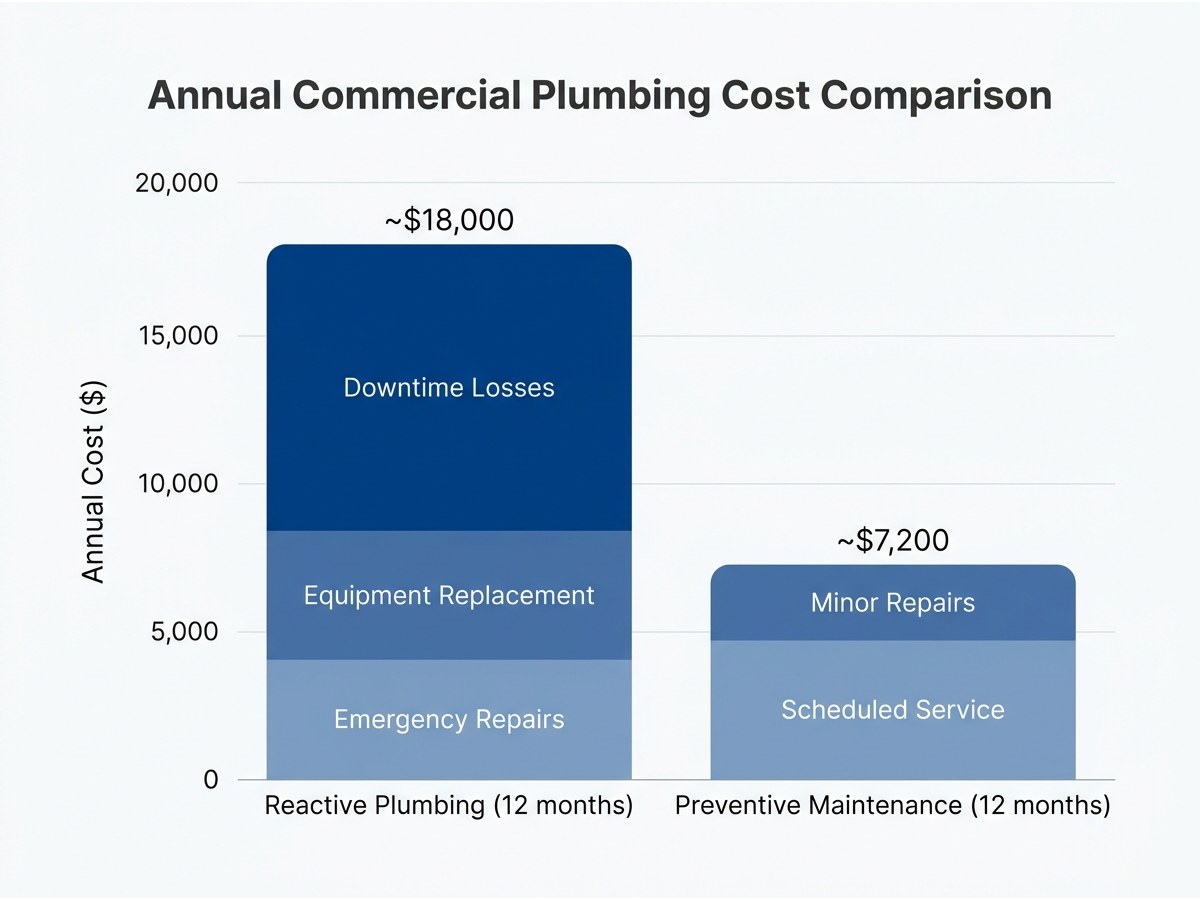
A worked cost model makes the preventive plumbing maintenance ROI case concrete. Consider a 50,000-square-foot office building in Greater Columbus with 8 bathrooms, a kitchen, 4 water heaters, and a main sewer line serving 150 occupants. Under the reactive plumbing model, this facility experiences:
Total reactive plumbing cost: $16,000 per year
Under a preventive maintenance contract (quarterly drain service, semi-annual water heater inspection, annual backflow testing, and on-call priority response), the same building pays:
Total preventive plumbing cost: $6,600 per year
Annual savings: $9,400 Contract payback period: 6.9 months 3-year cumulative savings: $28,200
In our work with property management clients across the Greater Columbus area, we see emergency call volume drop 60–70% in the first year of a PlumbGuard™ contract. The facilities that commit to scheduled service intervals eliminate the unpredictable plumbing crisis and the unpredictable invoice that follows.
Preventive maintenance delivers financial benefits that don't appear as line-item savings but contribute materially to total cost of ownership. Regulatory compliance, liability risk reduction, and audit readiness are operational dividends that protect facility budget planning from surprise costs.
Backflow preventer testing is legally required in most jurisdictions, including Columbus and surrounding municipalities. Facilities that miss the annual test face violation fines ranging from $500 to $5,000+ depending on severity and repeat offenses. According to EPA optimization guidance, facilities with documented preventive maintenance programs maintain regulatory compliance and avoid enforcement actions that trigger fines, mandatory remediation, and reputational damage.
Grease trap compliance follows the same pattern. Commercial kitchens must maintain cleaning schedules that prevent sanitary sewer overflows. Facilities that document quarterly grease trap service avoid violations, while reactive facilities face fines, mandatory inspections, and potential closure orders when they fail compliance audits.
Documented preventive maintenance creates a defensible position when plumbing failures cause water damage to tenant property or create safety hazards. The facility can prove it exercised reasonable care, reducing both claim severity and insurer risk ratings. Audit readiness matters for facilities under corporate ownership or institutional management. When a property sale, refinancing, or insurance renewal requires facility condition assessment, a documented maintenance history with dated inspection reports and service logs increases asset value and reduces buyer due diligence risk.
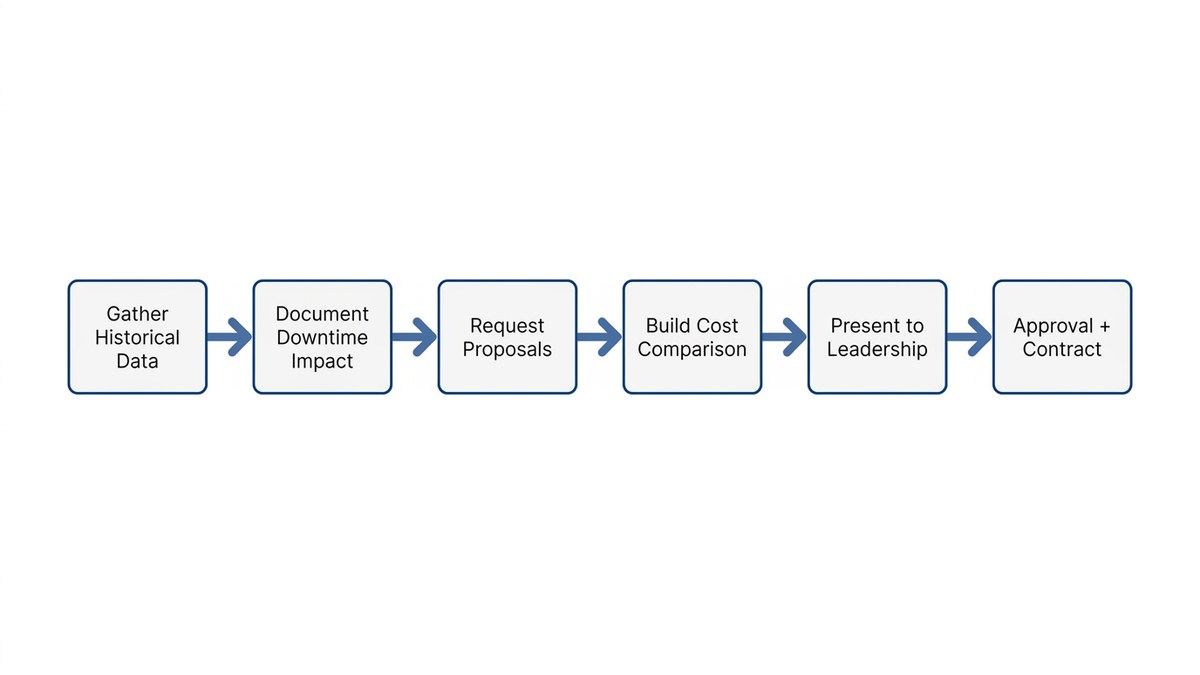
Facility managers who understand the preventive plumbing maintenance ROI case must still present it to leadership in a format that finance and property management teams accept. Building the internal business case requires three data inputs and a clear payback timeline.
Step 1: Gather historical emergency service data. Pull 24–36 months of plumbing invoices and calculate average annual spend on reactive repairs. Break out after-hours premiums, expedited service fees, and tenant complaint incidents. This becomes the baseline cost.
Step 2: Document downtime incidents and tenant impact. Work with property management to quantify how many business hours were lost to plumbing failures, how many tenant complaints were filed, and what those incidents cost in goodwill and operational disruption.
Step 3: Request preventive maintenance proposals from 2–3 qualified contractors. Compare monthly contract fees, service intervals, and emergency response terms. Look for contractors who document service history in a facilities management system and provide annual summary reports, backed by Trusted Plumbing Services Built on Experience and Accountability.
Step 4: Build a simple cost comparison table. Show annual reactive cost vs. annual preventive cost, calculate the payback period, and project 3-year cumulative savings. Conservative assumptions win credibility.
Step 5: Frame it as risk reduction, not just cost savings. Leadership cares about budget predictability, tenant retention, and compliance exposure. Position preventive maintenance as the strategy that eliminates surprise invoices, protects asset value, and shifts plumbing from a crisis management problem to a scheduled operating expense.
The business case for preventive plumbing maintenance is straightforward. It's addition and subtraction. Facilities that commit to scheduled service spend less, experience fewer crises, and protect their budgets from the volatility that comes with reactive firefighting.
Preventive plumbing maintenance ROI is a documented financial advantage, not an optional expense. Industry data and first-party operational results demonstrate substantial reductions in emergency repair costs, equipment lifespan extensions, and measurable downtime cost avoidance. The payback period for a commercial maintenance contract is typically 12–18 months, with cumulative cost savings maintenance benefits compounding over the life of the facility.
The reactive plumbing model (waiting for systems to fail and then paying emergency premiums to fix them) is a budget trap that hides costs in after-hours labor, tenant disruption, premature equipment replacement, and compliance violations. Facilities that shift to scheduled maintenance eliminate those hidden costs and gain budget predictability, compliance assurance, and operational reliability.
For property managers and facility teams across Greater Columbus and surrounding markets, the financial case is clear. Preventive investment in plumbing maintenance pays for itself through lower repair costs, extended equipment life, and avoided downtime, while delivering the operational peace of mind that comes from knowing the infrastructure is maintained before it fails.
Ready to shift from reactive plumbing costs to predictable facility maintenance? Request a Quote and let PDP build a preventive service program tailored to your building's infrastructure and budget.
— By PDP
Book a service request or consultation. We respond quickly and operate to professional service standards.
We’re Happy to Confirm
If your property is located in or around the Greater Columbus area and you don’t see your city listed, our team can quickly confirm coverage and service options.