2026-09-09
8
min read

Storm drain and sanitary sewer maintenance involves scheduled inspection, cleaning, and repair of two separate drainage systems. Storm drains carry rainwater runoff to streams and rivers, while sanitary sewers transport wastewater to treatment plants. Regular maintenance prevents blockages, code violations, flooding, and costly emergency repairs. Facilities require documented service intervals, camera inspections, hydro jetting, and compliance testing to keep both systems operational and avoid downtime.
For facility managers overseeing commercial properties, infrastructure failure translates directly to operational disruption. Flooded parking lots close tenant access, backed-up restrooms shut down business operations, and emergency excavation work stops revenue during repairs. The difference between a documented preventive maintenance plan and reactive-only service determines whether your facility experiences scheduled downtime you control or emergency failures that control you. Trusted Plumbing Services Built on Experience and Accountability starts with understanding what maintenance each system requires and why they're never the same infrastructure.
Storm drains and sanitary sewers are two distinct drainage networks designed for completely different purposes. Confusing them leads to compliance violations and infrastructure failures.
Storm drains collect rainwater runoff from roofs, parking lots, and paved surfaces through catch basins and inlet grates. This untreated water flows directly into local streams, rivers, and lakes without passing through wastewater treatment facilities. The Environmental Protection Agency regulates storm drain systems under the National Pollutant Discharge Elimination System (NPDES) permit program. According to the EPA's NPDES stormwater program guidance, operators of municipal separate storm sewer systems and many commercial facilities must implement pollution prevention measures and document maintenance activities.
Sanitary sewers transport wastewater from restrooms, sinks, floor drains, and food service areas to municipal wastewater treatment plants. This system requires backflow prevention devices, grease interceptors for food service tenants, and regular sanitary sewer inspection to prevent cross-contamination with storm drains.
The systems are separated by code in most jurisdictions built after 1950. However, older commercial districts may have combined sewer systems where storm runoff and sanitary waste share infrastructure, creating overflow risks during heavy rain events. Facility managers inheriting properties without documented maintenance history often discover they're responsible for maintaining both systems under different compliance schedules.
The operational stakes of deferred drainage maintenance extend beyond inconvenience to measurable downtime cost, regulatory liability, and tenant retention risk. The American Society of Civil Engineers' 2021 Infrastructure Report Card graded U.S. wastewater infrastructure a D-plus, noting that aging sanitary sewer systems lose an estimated 6 billion gallons of treated water annually through leaks and failures.
Operational disruption manifests in multiple forms. A storm drain blockage floods parking lots during rain, preventing customer and employee access. Residential Plumbing Services for Greater Columbus Homeowners share similar drainage vulnerabilities with commercial facilities, but commercial sites face immediate tenant evacuation and revenue loss when sanitary sewer backups close restrooms. Emergency excavation work requires closing driveways, coordinating traffic control, and managing tenant communication while the clock runs on lost revenue.
Compliance violations carry financial penalties and operational restrictions. EPA stormwater permits require facilities to implement best management practices, conduct regular inspections, and document maintenance activities. Illicit discharge violations (when sanitary waste enters storm drains or vice versa) trigger immediate enforcement action. According to the National Association of Clean Water Agencies, the average cost to remediate a sanitary sewer overflow event exceeds $30,000 when factoring in cleanup, reporting, and potential fines.
Preventive ROI makes the economic case undeniable. Scheduled camera inspections, hydro jetting, and catch basin cleaning cost a fraction of emergency excavation, permitting, and business interruption expenses. Facilities that document maintenance history demonstrate due diligence in code compliance audits and insurance claims, reducing liability exposure when failures do occur.
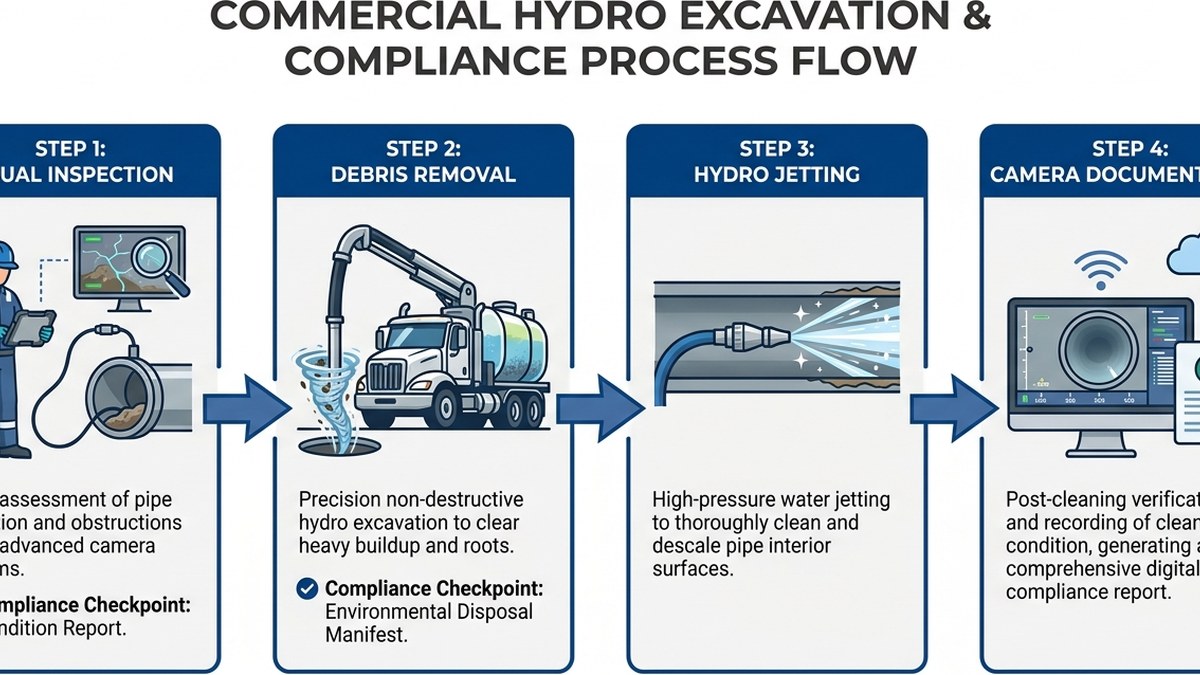
Storm drain maintenance focuses on preventing blockages that cause surface flooding. Service intervals vary by site conditions. High-traffic parking lots with heavy leaf debris require quarterly attention, while low-vegetation industrial sites may operate on annual schedules.
Catch basin cleaning removes accumulated debris, sediment, and pollutants before they enter waterways or block drainage capacity. Contractors vacuum sediment from the sump below the outlet pipe, clear debris from grates and inlet screens, and inspect the outlet connection for obstructions. The Water Environment Federation's stormwater best management practices recommend catch basin cleaning when sediment reaches 50 percent of sump capacity.
Grate and inlet inspection identifies physical damage, missing components, and capacity constraints before storm events test the system. Facility teams should check for cracked grates, displaced frames, and vegetation growth blocking inlet openings.
Pipe flushing and hydro jetting restore flow capacity in underground storm drain lines. High-pressure water breaks up sediment accumulation, removes root intrusion, and clears grease or debris that migrated from illicit connections.
Camera inspection provides visual documentation of pipe condition, joint integrity, and potential failure points. Licensed contractors run camera equipment through accessible cleanouts and manholes, recording footage that identifies cracks, root penetration, offset joints, and collapsed sections requiring repair.
Compliance documentation ties service records to permit requirements. Facilities operating under NPDES stormwater permits must maintain inspection logs, service receipts, and condition reports demonstrating regular storm drain and sanitary sewer maintenance activities.
Sanitary sewer maintenance prevents wastewater backups that shut down facility operations and create health hazards requiring immediate remediation. Unlike storm drains that operate intermittently during rain events, sanitary sewers carry continuous flow and accumulate grease, scale, and organic buildup that restricts capacity over time.
Line jetting and blockage prevention uses high-pressure water to scour pipe walls and break up accumulations before they cause backups. Contractors target sections serving food service areas, high-traffic restrooms, and aging infrastructure. Commercial facilities should schedule sanitary sewer jetting annually at minimum, with quarterly service for high-grease-load tenants.
Camera inspection for grease and root intrusion identifies the two most common causes of sanitary sewer failures. Proactive Plumbing Maintenance Built for Business Continuity includes regular camera inspection to document grease buildup from food service operations and tree roots that penetrate joints and create blockages.
Grease trap and interceptor cleaning prevents kitchen wastewater from introducing fats, oils, and grease into the sanitary sewer system. Local health departments mandate cleaning frequency based on interceptor size and kitchen volume (typically quarterly for high-volume operations). The National Restaurant Association's grease management guidelines emphasize that deferred interceptor maintenance leads to line blockages affecting the entire facility.
Backflow prevention testing ensures sanitary sewage cannot reverse flow into potable water systems during pressure fluctuations. Code requires annual testing and certification by licensed technicians, with documentation submitted to water authorities.
Lift station and pump inspection maintains forced-main sanitary systems where gravity drainage isn't feasible. Pump failure creates immediate backup risk, requiring regular inspection of float switches, control panels, check valves, and emergency alarms.
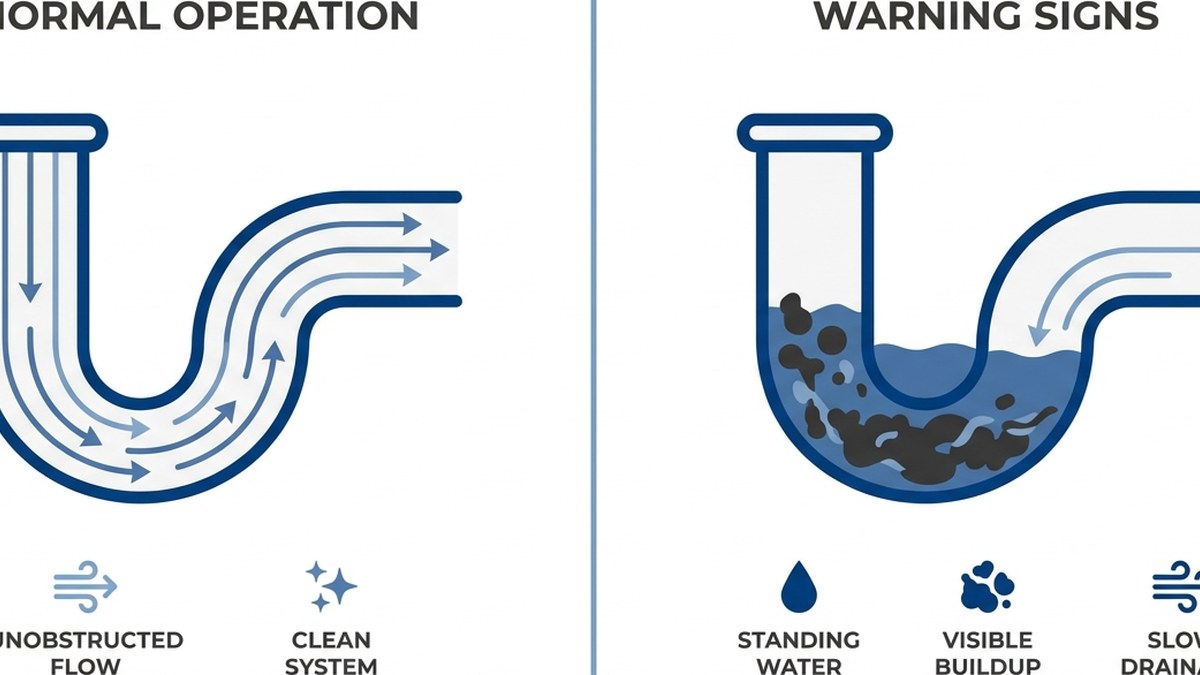
Facility managers who recognize pre-failure symptoms can intervene before total system collapse forces emergency excavation. Observable indicators signal that maintenance intervals have been exceeded or that infrastructure damage requires immediate professional assessment.
Slow drains across multiple fixtures indicate a main line restriction rather than isolated sink or toilet clogs. When restrooms on different floors or buildings experience simultaneous slow drainage, the sanitary sewer line serving the facility has reduced capacity.
Foul odors near manholes or floor drains signal sanitary sewer venting problems or dry trap seals allowing sewer gas into occupied spaces. Persistent odors require camera inspection to identify the source.
Standing water in parking lots after rain means storm drain capacity has been compromised by debris accumulation, pipe collapse, or undersized infrastructure. Facilities that experience ponding need immediate camera inspection.
Visible grease buildup in catch basins indicates illicit discharge from food service areas into the storm drain system, a violation of EPA stormwater permits and local ordinances.
Lift station alarms demand immediate response. Pump failure creates backup risk measured in hours, not days.
Tenant complaints about sewer gas or drainage issues often surface infrastructure problems before facility teams observe physical symptoms.
Transitioning from reactive firefighting to scheduled preventive maintenance requires an initial infrastructure audit, documented service intervals, compliance calendar integration, and a single accountable contractor.
Baseline infrastructure audit establishes current system condition through comprehensive camera inspection and flow testing. Contractors map the storm drain and sanitary sewer layout, identify all access points, document pipe materials and ages, and flag existing damage requiring repair.
Service intervals based on facility type align maintenance frequency with operational demands. High-traffic retail centers, healthcare facilities, and food service properties require quarterly sanitary sewer jetting and semi-annual storm drain cleaning. Office parks and light industrial facilities may operate on annual schedules for both systems.
Compliance scheduling integrates regulatory deadlines into the maintenance calendar. EPA stormwater permits require annual inspections and documentation. Backflow prevention devices need annual testing and certification. Grease interceptors operate on health department mandates ranging from quarterly to annual cleaning.
Single accountable contractor eliminates the coordination delays that occur when facility managers juggle separate vendors for camera inspection, jetting, excavation, and emergency response. Contractors who own in-house excavation crews, hydro jetting equipment, and camera inspection rigs deliver faster emergency response than generalists who subcontract specialized work.
Service history tracking creates documentation for audits, insurance claims, and asset management planning. Digital service documentation shows inspection dates, work completed, conditions documented, and compliance requirements satisfied.
DIY maintenance ends at surface-level tasks like clearing debris from visible catch basin grates. Camera inspection, hydro jetting, excavation, and compliance testing require licensed contractors with specialized equipment and documented training.
When professional service is required: Camera inspection demands equipment facility teams don't own and training in interpreting pipe condition. Hydro jetting involves high-pressure equipment creating safety risks. Excavation requires utility location, permitting, traffic control, and backfill compaction meeting code specifications. Backflow testing and grease interceptor pumping carry licensing requirements in most jurisdictions.
Questions to ask contractors before engagement: Does the contractor own the excavation crew or subcontract that work? What documentation standards apply to camera inspections and service records? What emergency response time commitments exist, and are after-hours fees waived for contract clients? What licensing and insurance coverage protects the facility from contractor negligence?
What a professional service visit includes: Pre-work camera inspection documents baseline conditions and verifies the scope. Service execution follows documented procedures with real-time photo and video capture. Post-work documentation includes service receipts, inspection footage, condition reports, and compliance certifications. Plumbing & Drain Services Across the Greater Columbus Area provides the local expertise for comprehensive storm drain and sanitary sewer maintenance. Book an Appointment With Plumbing & Drain Professionals to establish a documented service baseline before the next emergency.
A documented preventive maintenance plan eliminates the guesswork and keeps your facility compliant. Whether you need a baseline camera inspection, scheduled storm drain cleaning, or a full service contract covering both systems, PDP's in-house excavation team delivers transparent, accountable service with no after-hours fees. Request a Quote to schedule your facility's infrastructure audit and build a maintenance plan that works.
— By PDP
Book a service request or consultation. We respond quickly and operate to professional service standards.
We’re Happy to Confirm
If your property is located in or around the Greater Columbus area and you don’t see your city listed, our team can quickly confirm coverage and service options.


