2026-11-27
7
min read
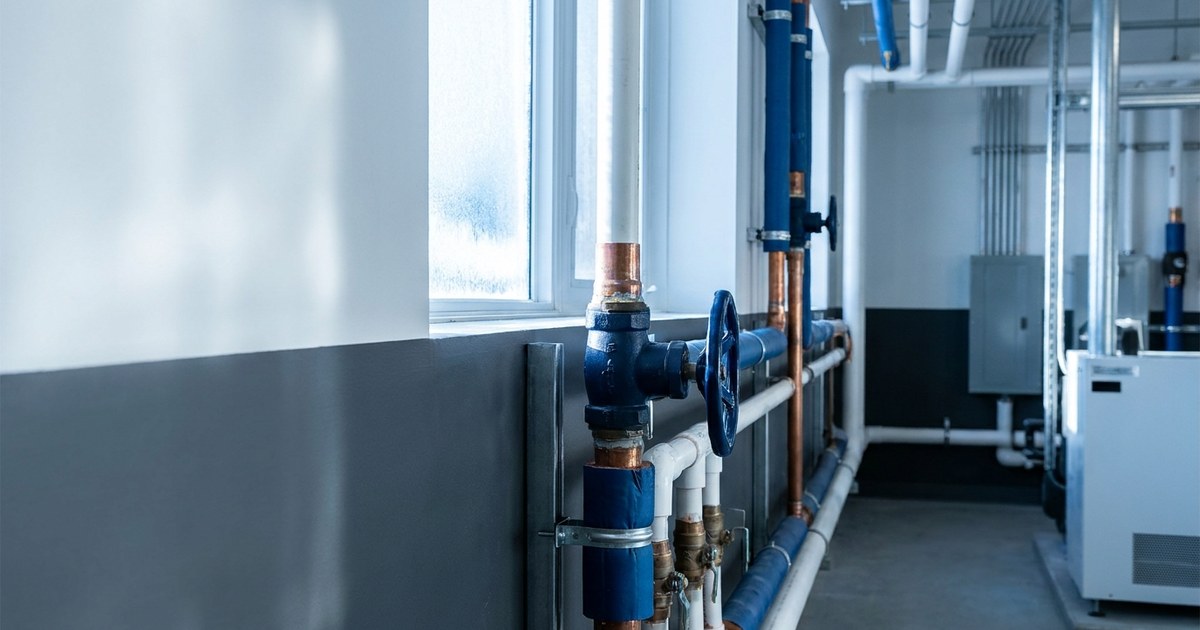
Picture a freeze at a facility nobody watches overnight. The water runs until morning.
What is commercial frozen pipe prevention? It comes down to four steps. Insulate exposed lines, seal cold air leaks around pipe penetrations, add heat tracing to lines that have caused trouble, and monitor temperatures in spaces you can't check daily. Pair that with a written plan that names who shuts off water and who calls the plumber.
In our work with Columbus commercial properties, we handle emergency frozen pipe repair during severe cold. Repair is the backstop. The written plan is what keeps the burst from happening. This guide is for facility and property managers who want that plan in place before the first hard freeze.
Insulate exposed lines, seal cold air leaks, add heat tracing to problem lines, and monitor temperatures where you can't check daily. Know where every main shutoff valve is. Prevention lowers risk but does not remove it, so keep a response plan.
Start with the four steps:
Then walk the outside of the site. List irrigation lines, hose bibs, wall hydrants, fire lines, outdoor backflow assemblies and any buried runs between buildings. Rarely used lines are the easy ones to forget.
Give every exterior line a label, a status and a name. The label says what it is. The status says whether it is drained or live. The name says who restores it in spring. Keep a shutoff log with the date, the location and who closed the line. That log prevents a spring surprise.
Exposed fixtures need care too. University of Georgia guidance on avoiding frozen pipes says freeze-proof faucets should be drained dry once the valve is shut off. Trapped water in an exposed faucet causes trouble even when the faucet is labeled freeze-proof. The same guidance suggests a slow drip when exposed pipes face below-freezing temperatures for hours. Treat that as a precaution for exposed fixtures, not a full plan.
Buried lines need a different check. Our team owns its excavation crew and camera equipment. We can locate and inspect underground runs without handing the job to another contractor.
Be honest about what prevention does. It lowers risk. It does not remove every risk. Scheduled work such as preventive maintenance for commercial plumbing catches weak spots before a cold snap finds them.
Takeaway: prevention is a short list of owned tasks, and every exterior line needs a label, a status and a name.
Pipes freeze when cold air reaches water that isn't moving. The usual spots are unheated spaces, gaps around penetrations, exterior lines and rarely used runs. Texas A&M's winter storm guidance on frozen pipes notes that water pipes can freeze and burst when outside temperatures turn severe. It also points to insulating exposed lines as a primary defense.
Here is where the objection comes in. "Our thermostat is set, so we're covered." A heated room does not protect a cold wall cavity. It does not protect a line that runs outside or through a dead ceiling space. The thermostat reads one point in the room. The pipe sits somewhere else.
So map the cold first. Walk the building with a marker and tag three kinds of space:
Those marks become the first draft of your commercial plumbing winter readiness checklist. A freeze begins in these places, so start your work here.

Takeaway: map the cold, unsealed and rarely used spaces first, because that is where a freeze begins.
Reduced flow or no water at a fixture, frost on exposed pipe, and unusual noises are early signs. A fixture that works elsewhere in the building but not in one cold area points to a localized freeze.
Train your staff to report these at once:
This is where your monitoring pays off. Temperature checks in spaces you can't visit daily give you a warning before a fixture does. A reading that keeps dropping in a storage room is a signal to act.
Do not wait for a full stoppage. A line that is partly frozen is already under stress. Our frozen pipe repair work locates the frozen section and assesses whether the line is blocked, cracked or at risk of bursting. If you want more detail on thawing and handling a line once you find it, we cover what to do with a frozen line in a separate article.
Takeaway: a fixture that fails in one cold area is a warning, so report it before the pipe splits.
Shut off the water at the nearest valve, or the main if you can't tell where the break is. Keep power away from wet areas, protect equipment and stock, and call a licensed commercial plumber right away.
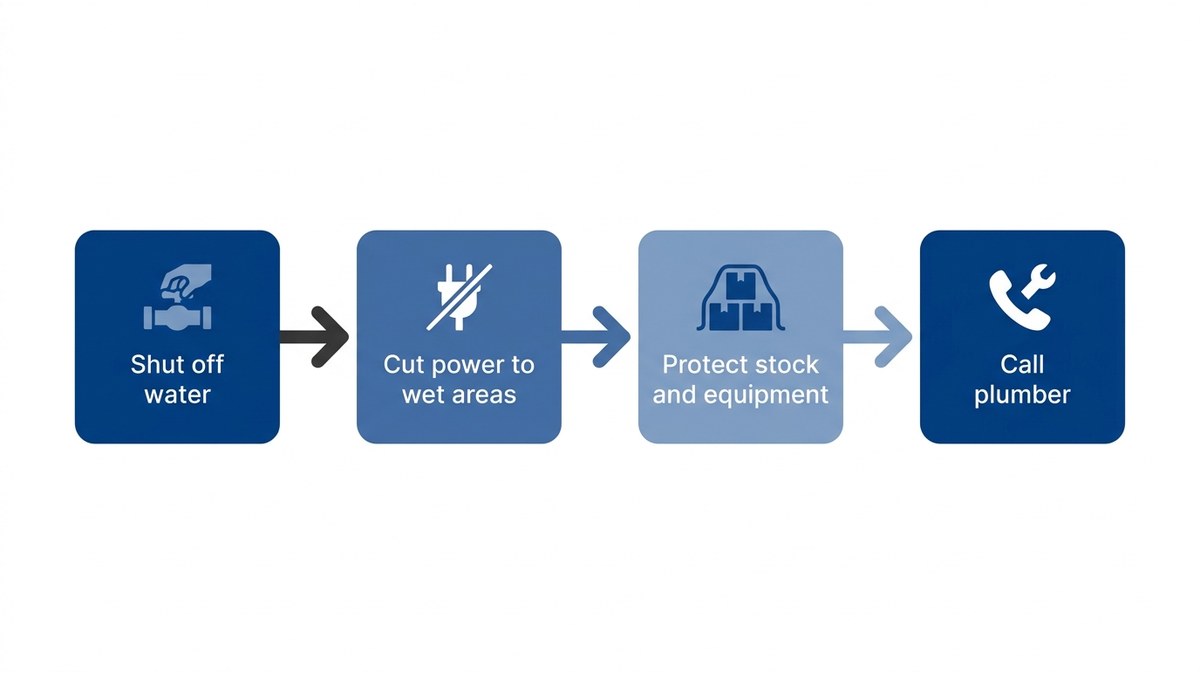
Follow these steps in order:
None of this works if staff can't find the valve at 2 a.m. Write a one-page plan with names on it. It should say who shuts off water, where the valves are, who calls the plumber and how the plumber responds after hours. Tag the main shutoff valves and mark them on the floor plan.
A written plan is also a risk decision. A JLL facilities management report covered by Buildings.com (2025) found that 60% of surveyed participants named business continuity planning for critical operations as the foremost risk management priority for facility managers. A freeze plan is part of that job.
Many managers worry about the bill when it happens at night. Our 24/7 commercial plumbing repair and emergency response carries no after-hours fees. Our emergency line is 614-758-6237.
Takeaway: a one-page plan with names turns a night emergency into a short checklist.
Call as soon as you suspect a freeze you can't clear, see any leak, or can't tell if a line is cracked. A plumber can locate the frozen section and assess whether the line is blocked, cracked or at risk of bursting.
Call for any of these:
Customers have told us our crew reached their facility within the hour during an emergency. That is their experience, not a promised response time.
Ask any provider about its winter plan before you need it. Winter is when after-hours demand peaks. Ask how it handles frozen pipe repair in severe cold, who answers at night and what an after-hours call costs. A vendor that cannot explain its January plan is not ready for your January.
You can also move work off the emergency list. Scheduled pipe and leak inspections turn winter firefighting into planned work. That is the idea behind how a PlumbGuard™ maintenance contract works.
Takeaway: call early, and judge your plumber by the plan it can describe before the freeze.
The plan prevents the call. The plumber is the backstop. Map your cold spaces, label every exterior line, log every shutoff and write down who does what. Do it before the first hard freeze, not after the first burst.
If you manage Columbus properties, read our winter emergency planning guide for property managers as a next step. If a freeze happens first, call 614-758-6237.
Want a cold-weather plan in place before the first hard freeze? Request a Quote
Book a service request or consultation. We respond quickly and operate to professional service standards.
We’re Happy to Confirm
If your property is located in or around the Greater Columbus area and you don’t see your city listed, our team can quickly confirm coverage and service options.