2026-09-18
11
min read
Preventive drain cleaning saves money by eliminating emergency repair costs, avoiding facility downtime, extending drain system lifespan, and reducing health code violation risk. Scheduled hydro-jetting and grease trap maintenance cost 60–80% less than emergency calls and prevent the cascading failures that close facilities and break budgets.
A Columbus restaurant manager watches her Friday dinner service collapse at 6:30 p.m. The kitchen drain backs up, flooding the prep area with grease and wastewater. She calls an emergency plumber who arrives two hours later and charges $850 for a temporary fix. The health inspector shows up Saturday morning for a scheduled inspection, documents the drainage failure, and issues a violation. Lost Friday and Saturday revenue exceeds $12,000. Emergency service and follow-up repair add $2,400. The single reactive drain failure generates over $15,000 in direct and indirect costs.
Scheduled Proactive Plumbing Maintenance Built for Business Continuity transforms this chaos into predictable line-item maintenance. Trusted Plumbing Services Built on Experience and Accountability form the foundation of effective commercial preventive drain maintenance programs that prevent failures before they close facilities.
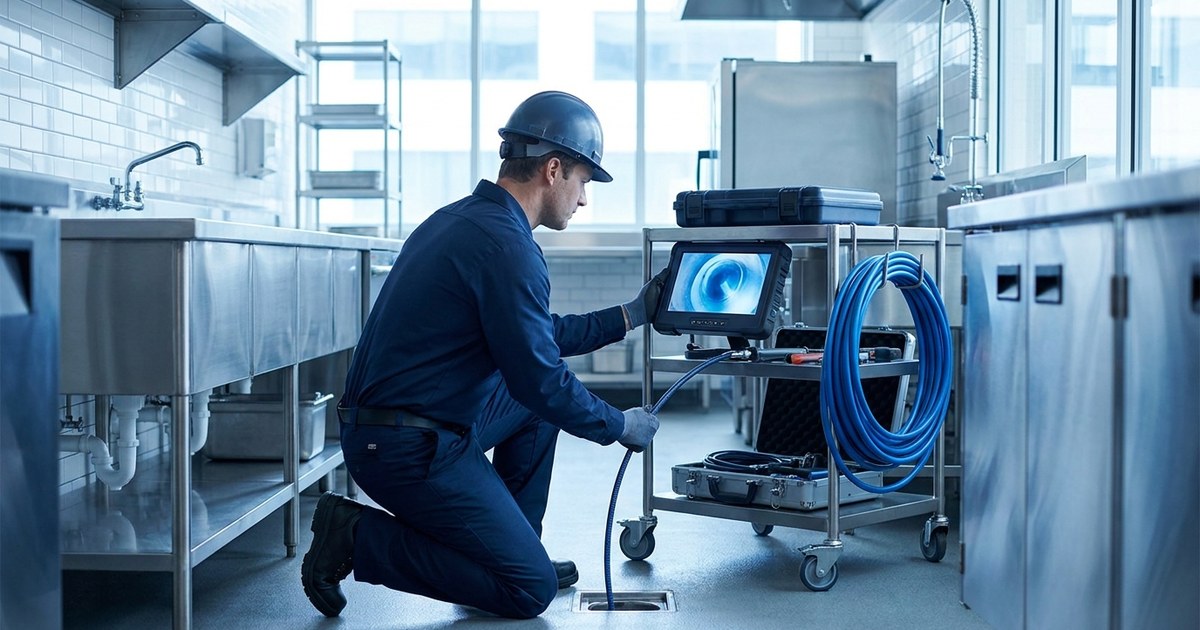
Preventive drain cleaning is a documented maintenance protocol that clears drain lines, grease traps, and waste systems before buildup causes blockages. A typical program operates on quarterly or semi-annual service intervals depending on facility type. Each service visit includes high-pressure water jetting of main waste lines, grease trap or interceptor pumping (for food service facilities), camera inspection of key drain runs to identify root intrusion or corrosion, documentation of service completion with photos and logs, and scheduling coordination to minimize facility disruption.
For facility managers unfamiliar with maintenance cycles, this approach is equivalent to changing HVAC filters on schedule rather than waiting for the system to fail mid-summer. The cost is predictable, the work happens during low-occupancy windows, and the documentation creates an audit trail that satisfies inspectors.
Hydro-jetting uses high-pressure water (typically 3,000–4,000 PSI) to scour the interior surface of drain pipes. This process removes grease deposits, mineral scale, and tree root intrusions, restoring pipes to near-original diameter and eliminating the residue that causes recurring clogs.
Reactive snaking uses a mechanical auger to punch a hole through a blockage. The cable clears enough obstruction to restore immediate flow but leaves grease, scale, and root fragments clinging to pipe walls. Within 30–90 days the drain slows again, requiring another emergency call.
A facility that calls for reactive service three times per year spends more on temporary fixes than it would invest in comprehensive annual preventive drain maintenance. Advanced maintenance technologies from ARPA-E initiatives demonstrate how hydro-jetting extends drain line lifespan by preventing the corrosion and pipe degradation caused by prolonged exposure to acidic waste and standing water.
For restaurant kitchens, hospital cafeterias, and food service operations, grease trap maintenance is both a compliance requirement and a downtime preventer. Local health codes mandate cleaning intervals to prevent fats, oils, and grease from entering the municipal sewer system. Typical requirements call for monthly service for high-volume kitchens and quarterly service for moderate-volume operations.
Skipping scheduled grease trap service leads to predictable failure: the trap fills beyond capacity, grease backs up into kitchen floor drains, wastewater floods the prep area, and the facility faces permit suspension. Emergency grease trap pump-outs occur at premium rates compared to scheduled quarterly cleaning.
The preventive drain cleaning savings calculation is straightforward: compare the total annual cost of reactive emergency service (including after-hours surcharges, facility downtime, and cascading repair expenses) to the fixed cost of a scheduled maintenance contract.
Consider a multi-tenant office building in Columbus with 50,000 square feet and 15 restrooms operating under the reactive model. Over 12 months the property manager logs four emergency drain calls: two for main line backups (tree root intrusion), one for a tenant restroom overflow, and one for a loading dock floor drain blockage. Each emergency call generates significant service costs including diagnosis and after-hours surcharges. Lost tenant productivity during restroom closure adds additional expense.
Under a preventive maintenance contract, the same building receives quarterly hydro-jetting of main waste lines, semi-annual camera inspection, and emergency service coverage with no after-hours surcharge. The facility experiences zero emergency calls in the first year because camera inspection identifies and resolves the tree root intrusion before it causes a backup.
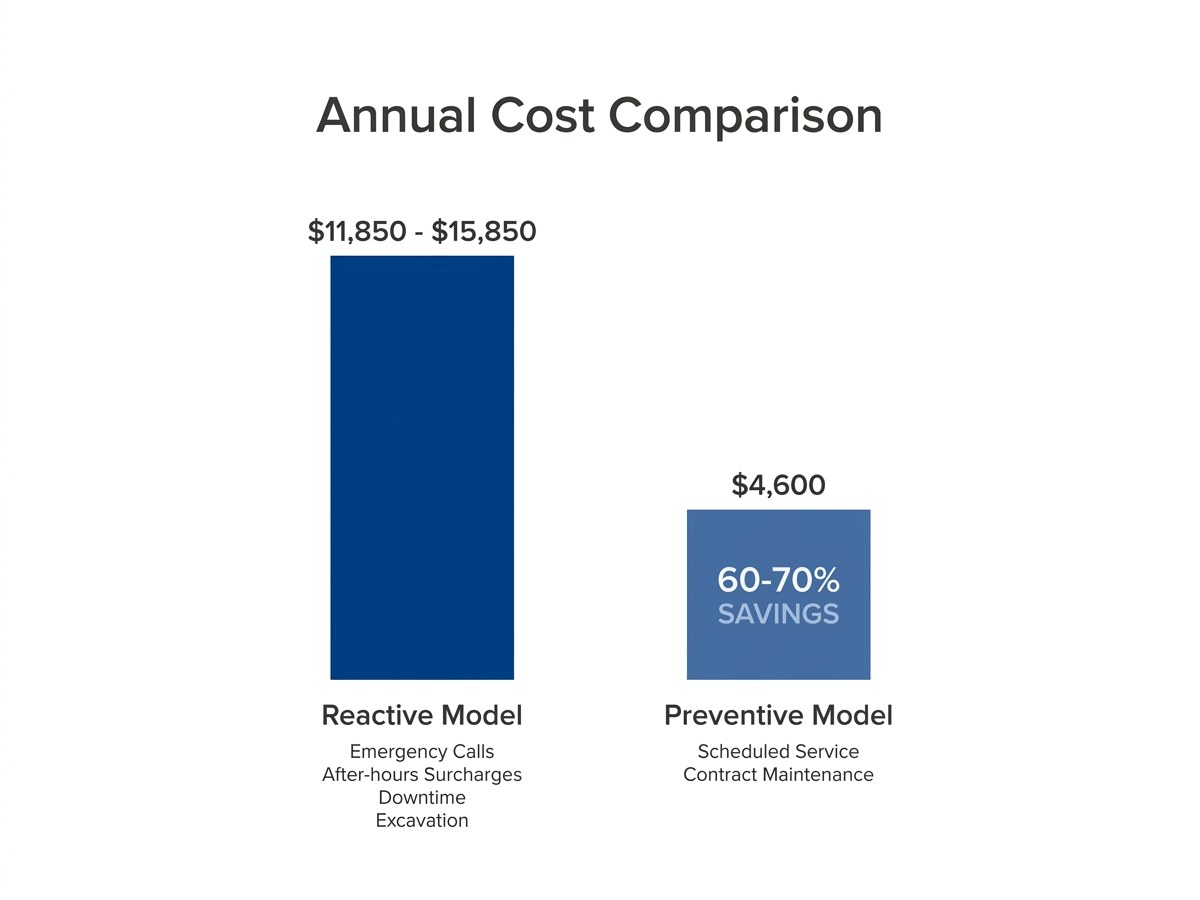
Facility managers can evaluate the financial case by examining typical cost structures for both service models. The table below illustrates representative scenarios based on facility type and maintenance approach:
| Cost Category | Reactive Model | Preventive Model | Benefit |
|---|---|---|---|
| Office Building (50K sq ft, annual) | |||
| Emergency drain calls | Multiple high-cost events | Zero (prevented) | Eliminated disruption |
| After-hours surcharges | Premium rates apply | Included in contract | Predictable costs |
| Facility downtime | Tenant productivity loss | Scheduled low-impact service | Maintained operations |
| Preventive maintenance | None | Quarterly contract | Systematic prevention |
| Restaurant Kitchen (annual) | |||
| Emergency grease backups | Multiple emergency calls | Zero (prevented) | Avoided health violations |
| Main line failures | Catastrophic repair costs | Zero (prevented) | Operational continuity |
| Lost revenue | Kitchen shutdown days | Scheduled off-peak service | Revenue protection |
| Scheduled maintenance | None | Monthly + quarterly service | Compliance assurance |
When comparing total costs (direct service fees plus downtime), preventive maintenance contracts typically deliver substantial cost reductions compared to reactive service models.
Early warning signs of drain system degradation (slow drains, recurring clogs, sewer odor, gurgling fixtures) signal pipe corrosion, root intrusion, or grease accumulation that will escalate into catastrophic failure if ignored. A slow-draining floor sink in a commercial kitchen represents deferred maintenance that will become a capital expense.
Cast iron waste lines corrode from the inside as acidic waste and standing water dissolve the protective oxide layer. The process accelerates when grease and biofilm coat the pipe interior and trap moisture against the metal. A quarterly hydro-jetting interval removes the corrosive deposits before they penetrate the pipe wall.
Tree root intrusion follows a similar escalation curve. Roots seek moisture and nutrients in sewer lines, entering through joint gaps and pipe cracks. Once established, roots expand and fracture the pipe, creating blockages that no amount of snaking will permanently clear. Camera inspection during a preventive service visit identifies root intrusion at the early stage, when hydro-jetting and root-cutting attachments remove the obstruction. Deferred maintenance allows roots to mat into a blockage that requires excavation and pipe replacement.
The financial ROI of preventive drain cleaning is the primary justification for facility managers presenting budget requests to leadership. However, the operational benefits deliver immediate value to day-to-day responsibilities.
A scheduled maintenance contract eliminates the operational chaos of coordinating emergency plumbing repairs during business hours. Preventive service visits happen during low-occupancy windows (early morning, weekends, after-hours for 24/7 facilities) and complete in 2–4 hours with minimal facility disruption. There are no surprise shutdowns, no scrambling to notify tenants, no expedited material fees. Reliable Local Service Backed by Professional Standards includes preventive maintenance protocols designed to protect commercial operations.
Health department inspections, building code compliance audits, and insurance carrier site visits all require documented proof of maintenance for critical building systems. Facility managers operating under the reactive model have no maintenance history to present.
A preventive maintenance contract creates a compliance audit trail. Every hydro-jetting service, grease trap pump-out, and camera inspection is logged with date, technician, photos, and service completion notes. When the health inspector asks about grease trap cleaning frequency, the facility manager shows a 24-month service history with pump-out receipts and compliance certification.
In multi-tenant commercial properties, recurring plumbing failures erode tenant satisfaction faster than almost any other maintenance issue. A slow elevator annoys tenants. A restroom backup that forces employees to use facilities on another floor generates lease non-renewal conversations.
Scheduled preventive drain maintenance eliminates the visible plumbing failures that tenants experience as property management indifference. Tenants never see the quarterly hydro-jetting visit that happens at 6 a.m. before the building opens. They only notice that the restrooms function reliably and floor drains clear instantly.
In our work with commercial clients enrolled in the PlumbGuard® preventive maintenance program, we document substantial reductions in emergency drain service calls during the first 12 months compared to the pre-contract baseline. Facilities that averaged four emergency calls per year under the reactive model drop to one or zero emergency events after implementing quarterly hydro-jetting and grease trap schedules.
The cost avoidance is measurable. A Columbus-area healthcare facility with 120 beds and a commercial kitchen switched from reactive plumbing service to PlumbGuard® in early 2025. In the 18 months prior to enrollment, the facility logged seven emergency drain calls with significant service fees plus estimated kitchen downtime costs. In the 18 months following PlumbGuard® enrollment, the facility experienced zero emergency drain events.
The most common failure mode we identify during preventive camera inspections is early-stage root intrusion at pipe joints. Tree roots enter cast iron and clay sewer lines through joint gaps and hairline cracks, establishing a foothold long before the blockage becomes symptomatic. In a significant portion of preventive camera inspections across our Columbus-area commercial client base, we identify root intrusion that would escalate into a full blockage within 6–12 months if left untreated. Hydro-jetting with a root-cutting nozzle clears the intrusion during the same service visit.
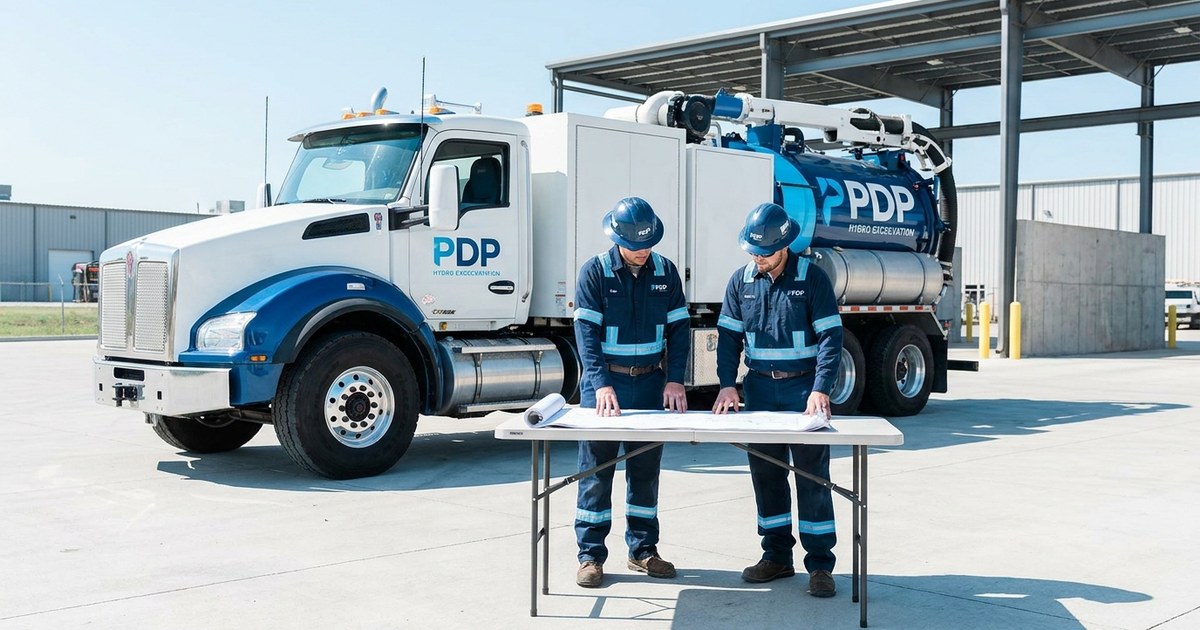
The in-house excavation advantage becomes critical when camera inspection reveals a failure that requires pipe repair or replacement. When our camera inspection identifies a collapsed section or severe corrosion, our own excavation crew (hydro excavation truck, trenchless pipe lining capability) handles the repair the same week without subcontractor coordination delays.
For facility managers evaluating preventive drain cleaning savings and preventive maintenance ROI, the PlumbGuard® model eliminates the "what if something still breaks?" objection. Enrolled facilities receive 24/7 emergency response with no after-hours surcharge, ensuring that unexpected events receive immediate attention without penalty fees.
The optimal preventive drain cleaning interval depends on facility type, drainage system age, occupancy volume, and compliance requirements.
Restaurant kitchens and food service facilities require monthly grease trap or interceptor pump-outs (mandated by local health codes) plus quarterly hydro-jetting of kitchen floor drains and waste lines. High-volume quick-service restaurants with deep fryers and high grease output may require semi-monthly grease trap service.
Multi-tenant office buildings with standard restroom and break room fixtures operate effectively on semi-annual hydro-jetting of main waste lines plus annual camera inspection of key runs. Buildings with known problem areas (tree roots near the property line, aging cast iron stacks) benefit from quarterly jetting of affected sections while maintaining semi-annual service for the remainder of the system.
Healthcare facilities, senior living properties, and assisted living centers fall into the high-risk category due to regulatory scrutiny and resident safety requirements. These facilities require quarterly hydro-jetting of main lines, monthly grease trap service (for commercial kitchens), and semi-annual camera inspection to identify early-stage failures before they disrupt care operations.
Retail centers and strip malls with food service tenants require grease trap service intervals dictated by tenant volume (monthly or quarterly depending on kitchen size), while anchor retail tenants with minimal food service can operate on semi-annual main line jetting.
A professional site assessment determines the optimal schedule. PDP's preventive maintenance assessment includes camera inspection of key drain runs, grease trap capacity evaluation (for food service facilities), age and material assessment of waste lines, identification of known problem areas, and review of historical service records to identify recurring failure patterns. Plumbing & Drain Services Across the Greater Columbus Area commercial properties benefit from customized maintenance schedules tailored to specific facility demands and regulatory requirements.
Preventive drain cleaning transforms commercial plumbing from an unpredictable budget liability into a predictable line-item expense. Facility managers who adopt scheduled hydro-jetting, grease trap maintenance, and camera inspection protocols eliminate the 2 a.m. emergency call, the Friday kitchen shutdown, and the health inspector violation that suspends operations.
The financial ROI (documented cost reduction compared to reactive service) justifies the decision to ownership and executive leadership. The operational ROI (uptime assurance, compliance documentation, tenant satisfaction) delivers immediate value to the facility manager's daily responsibilities.
The reactive model treats plumbing as a firefighting expense: pay nothing until something breaks, then pay premium rates to fix it immediately while absorbing downtime and secondary damage costs. The preventive model treats plumbing as operational infrastructure: invest in scheduled maintenance that extends system lifespan, prevents failures, and creates the compliance documentation trail that satisfies inspectors and insurance carriers.
For commercial properties ready to make the shift, Commercial Plumbing Services in Gahanna, OH and across the region deliver PlumbGuard® preventive maintenance with documented cost savings, operational accountability, and the peace of mind that comes from infrastructure you can trust. The program eliminates the coordination chaos of juggling multiple contractors by delivering hydro-jetting, grease trap service, camera inspection, and in-house excavation under one service agreement.
Facility managers considering preventive drain maintenance face a straightforward decision: continue paying emergency rates for reactive service that never solves the underlying problem, or invest less in scheduled maintenance that prevents the failures before they close your facility. The operational benefits are measurable, the financial case is clear, and the compliance advantages are immediate.
Ready to shift from reactive plumbing costs to predictable maintenance budgets? Request a Quote for PlumbGuard® preventive drain service and see how scheduled maintenance protects your facility's uptime and bottom line. Book an Appointment With Plumbing & Drain Professionals to establish the documentation protocol your facility needs, or explore additional facility maintenance insights and drain maintenance cost-benefit strategies at the Plumbing & Drain Professionals Blog.
Book a service request or consultation. We respond quickly and operate to professional service standards.
We’re Happy to Confirm
If your property is located in or around the Greater Columbus area and you don’t see your city listed, our team can quickly confirm coverage and service options.