2026-09-23
17
min read
What does restaurant plumbing compliance actually mean for your kitchen operations? Restaurant and food service plumbing compliance means meeting local health department and building code requirements for grease management, backflow prevention, cross-connection control, fixture counts, and drainage capacity. In Columbus, compliance involves regular grease trap maintenance, annual backflow testing, proper venting, and documented service records that pass health inspections without violations or downtime. For facility managers and restaurant operators across Greater Columbus, compliance isn't just about passing inspections. It's about maintaining operational continuity and avoiding the costly disruptions that force kitchens to shut down mid-service.
The difference between a compliant facility and one that faces repeated violations comes down to preventive infrastructure planning and scheduled maintenance. When health inspectors arrive, they're checking grease interceptor records, backflow test certificates, hot water capacity, and drainage system documentation. The facilities that pass without red tags are the ones that treat plumbing compliance as an operational discipline, not a last-minute checklist. Proactive Plumbing Maintenance Built for Business Continuity transforms compliance from a reactive burden into a predictable maintenance cycle that keeps your kitchen audit-ready year-round.
By PDP
Restaurant plumbing compliance extends beyond meeting minimum code requirements. For facility operators, it means building infrastructure that handles peak demand without failures, maintaining documentation that satisfies health department audits, and establishing vendor relationships that respond within operational timelines. A compliant facility doesn't experience grease line backups during dinner service, doesn't fail backflow tests that trigger re-inspections, and doesn't lose hot water capacity during breakfast prep.
Columbus health inspectors evaluate plumbing systems using FDA Food Code standards combined with Ohio Building Code drainage and fixture requirements. A violation in any category (grease trap capacity, backflow device failure, inadequate handwashing stations, improper drainage slope) can result in point deductions that affect your facility's health grade or trigger immediate corrective action orders.
The compliance burden falls on facility managers who must coordinate maintenance across multiple systems while keeping the kitchen operational. Trusted Plumbing Services Built on Experience and Accountability providers who specialize in food service understand this operational pressure and structure service delivery around facility schedules, not residential convenience windows.
Compliance also means maintaining a paper trail. Health inspectors expect to see grease trap pumping logs with dates and volumes, backflow test reports signed by certified testers, water heater temperature verification records, and plumbing service documentation showing preventive maintenance intervals. The facilities that pass inspections without friction are the ones with organized records proving continuous compliance.
Food service plumbing compliance starts with understanding the non-negotiable infrastructure requirements that health departments enforce. These standards protect public health by preventing contamination, ensuring adequate sanitation capacity, and maintaining safe water supply systems. Every restaurant, cafeteria, and commercial kitchen in Columbus must meet these baseline requirements or face violations that can shut down operations.
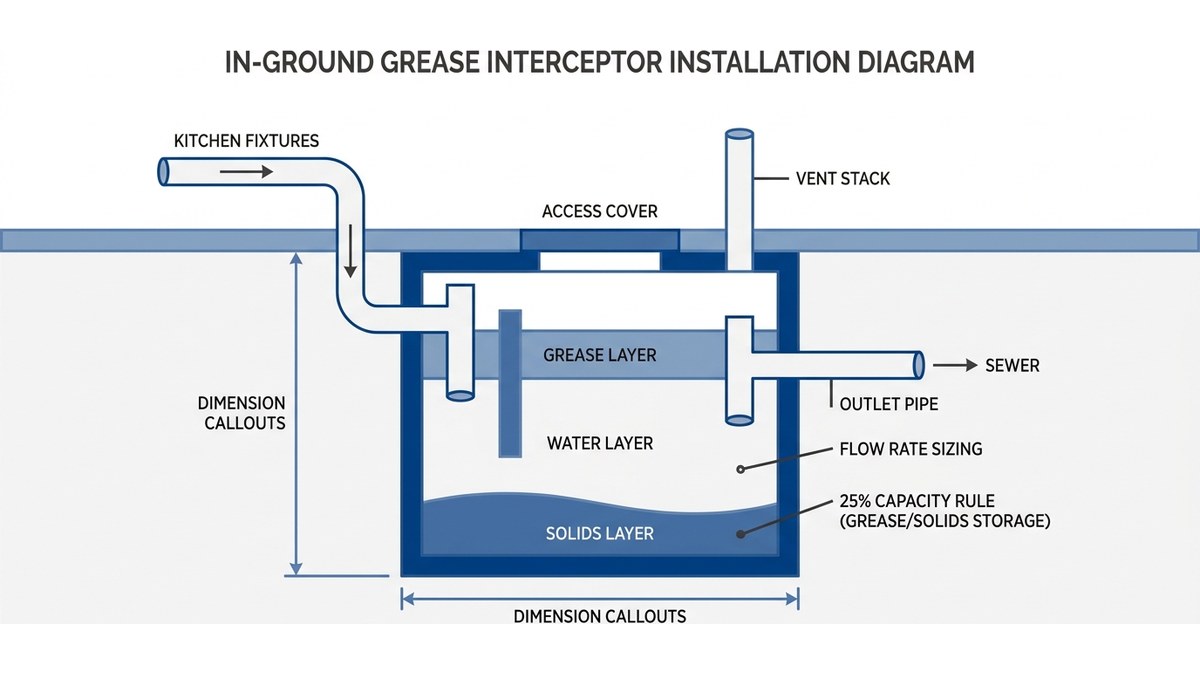
Grease management sits at the top of the compliance hierarchy because FOG discharge causes the majority of food service plumbing failures. Columbus Public Utilities requires grease interceptors for most restaurants based on fixture unit counts and projected grease load. The sizing calculation depends on your kitchen's flow rate (gallons per minute through fixtures) and the type of food preparation your facility performs. High-volume kitchens cooking with significant oils typically require in-ground interceptors ranging from 500 to 1,500 gallons, while smaller operations may qualify for under-sink traps rated at 20 to 50 pounds of grease capacity.
Installation standards mandate proper venting, adequate access for maintenance, and separation from potable water lines. The interceptor must be accessible for pumping without disrupting kitchen operations. According to Plumbing Manufacturers International grease interceptor guidelines, proper maintenance frequency depends on total capacity and grease load. Most high-volume restaurants require quarterly pumping based on accumulation rates. Documentation of every pump-out (date, volume removed, disposal facility) becomes part of your permanent compliance record.
Facilities that skip scheduled grease trap maintenance face predictable consequences: drain line backups during peak service hours, FOG discharge violations that carry municipal fines, and emergency service calls that cost three times what scheduled maintenance would have. Commercial Plumbing Excellence for Columbus Businesses providers track service intervals and maintain documentation that satisfies health department audits.
Backflow prevention protects the potable water supply from contamination by preventing reverse flow from plumbing fixtures back into the public water system. Food service facilities create numerous cross-connection risks: carbonated beverage dispensers, ice machines, dishwashers with chemical injectors, mop sinks, and pre-rinse spray valves all require backflow prevention devices.
ASSE International standards classify backflow prevention assemblies by hazard level. High-hazard applications (any fixture that could introduce chemicals or sewage into potable water) require reduced pressure zone (RPZ) assemblies. Medium-hazard applications may use double-check valve assemblies. Ohio code mandates annual testing of all backflow devices by state-certified testers, with test reports filed with the local water authority.
A failed backflow test doesn't just mean paperwork. It means your facility has a contamination pathway that must be repaired and retested before you can operate legally. The repair-retest cycle typically takes 48 to 72 hours when you're coordinating with a certified tester's schedule. Facilities on preventive maintenance contracts test backflow assemblies on a rolling schedule that avoids surprise failures during health inspections.
The FDA Food Code establishes minimum fixture counts based on your facility's size and service model. Every food preparation area must have a handwashing sink within 20 feet of the workspace, supplied with hot water (minimum 100°F), soap, and single-use towels. These handwashing stations cannot be used for food preparation or utensil washing (a common violation when kitchens try to make one fixture serve multiple functions).
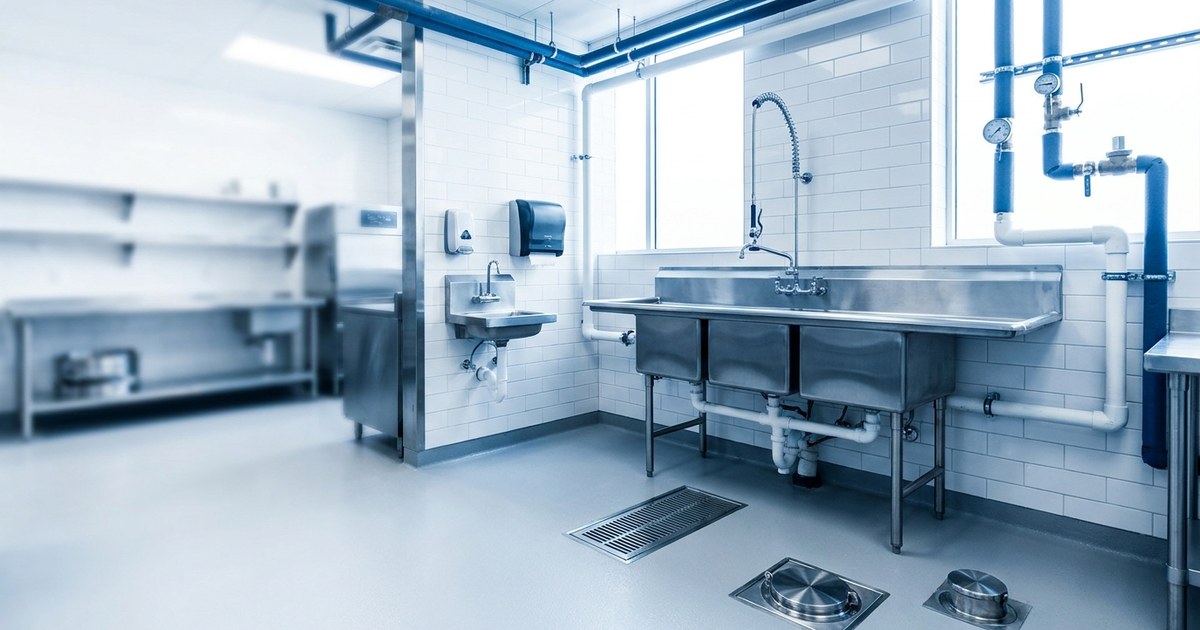
Three-compartment sinks for manual dishwashing must meet specific sizing requirements (each compartment large enough to submerge the largest pot or pan), drainage capacity, and hot water delivery standards. Pre-rinse stations, mop sinks, floor drains, and equipment connections each carry their own fixture standards and drainage slope requirements.
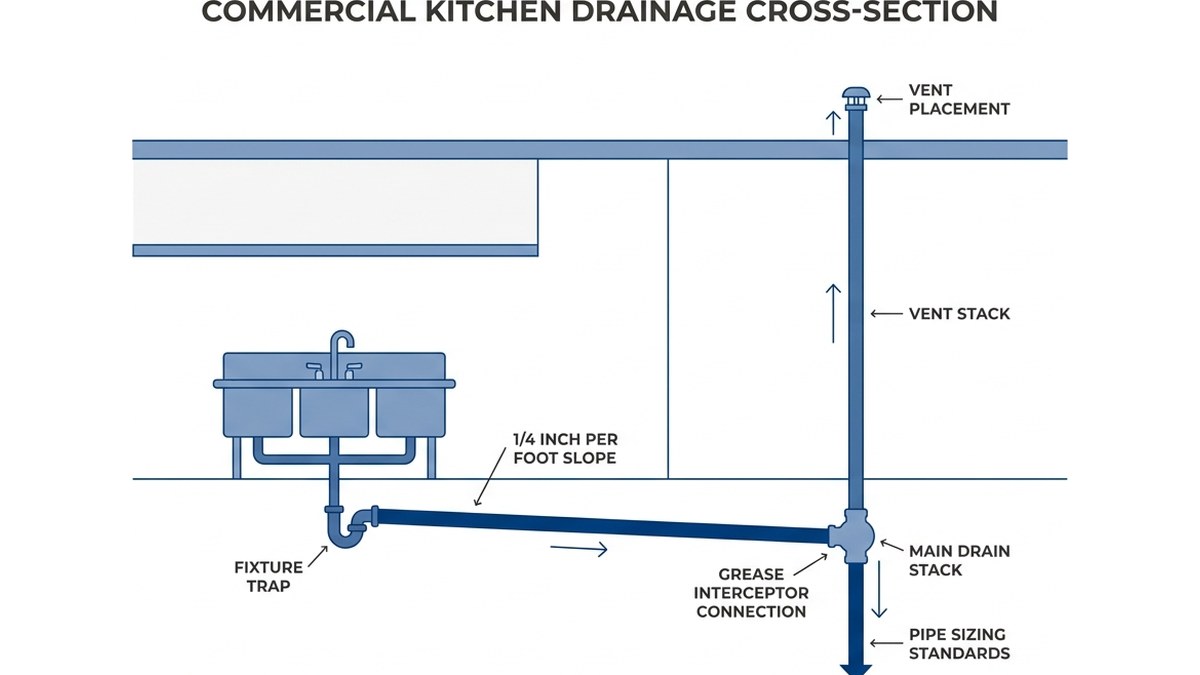
Drainage system design must handle peak flow without backups. Ohio Plumbing Code specifies minimum drain line sizes, vent stack placement, and slope requirements (typically 1/4 inch per foot for horizontal runs) to ensure gravity drainage functions properly. Undersized drains or improper slope create chronic slow-drain conditions that escalate to backups when the kitchen hits peak volume.
Grease management failures cause more health code violations and operational disruptions than any other single plumbing issue in food service facilities. EPA and local wastewater authorities set FOG discharge limits to protect municipal sewer systems from blockages, but restaurant operators often treat grease trap maintenance as optional until a violation or backup forces corrective action. Understanding the difference between grease traps and interceptors, knowing when to pump, and maintaining proper documentation separates compliant facilities from those that face repeated violations.
The sizing decision between an in-ground grease interceptor and under-sink trap depends on your kitchen's flow rate, fixture unit count, and the type of food preparation you perform. According to International Association of Plumbing and Mechanical Officials (IAPMO) standards, Columbus building code typically requires in-ground interceptors for restaurants with more than 50 seats, facilities with high-volume fryers, or kitchens that generate significant grease load from meat preparation and cooking processes. These passive systems use gravity separation to capture FOG before it enters the sewer system, with capacities ranging from 500 gallons (small full-service restaurants) to 2,000+ gallons (large institutional kitchens or hotel food service operations).
In-ground interceptors require outdoor installation with vehicle access for pump trucks, proper venting to prevent gas buildup, and adequate separation from building foundations. Installation costs range from $8,000 to $25,000 depending on excavation requirements, but the operational advantage is a longer service interval (quarterly pumping for most facilities) and higher capacity that handles peak loads without overflow.
Under-sink grease traps serve smaller facilities: coffee shops with limited cooking, bars with minimal food prep, or satellite kitchens that only reheat prepared items. These compact units (typically 20 to 50 pounds grease capacity) install directly under the sink and require weekly or biweekly maintenance depending on use. The lower upfront cost ($500 to $2,000 installed) comes with higher maintenance frequency and limited capacity that can't handle volume spikes.
Facility managers who undersize grease management capacity face chronic problems. Plumbing & Drain Services Across the Greater Columbus Area providers assess your actual kitchen operations (menu type, cooking volume, fixture count, peak flow rates) to spec the right capacity, not just meet minimum code.
Regular maintenance prevents the failure cascade that starts with slow drainage and ends with kitchen shutdowns. First, drainage slows as grease accumulates in branch lines. Then, during a peak service period when the kitchen is running all stations simultaneously, the system can't handle the flow and backs up into fixtures. A grease backup during Saturday dinner service doesn't just mean calling an emergency plumber. It means potentially shutting down the kitchen, losing revenue, facing customer complaints, and possibly triggering a health department inspection if the backup creates a sanitation hazard.
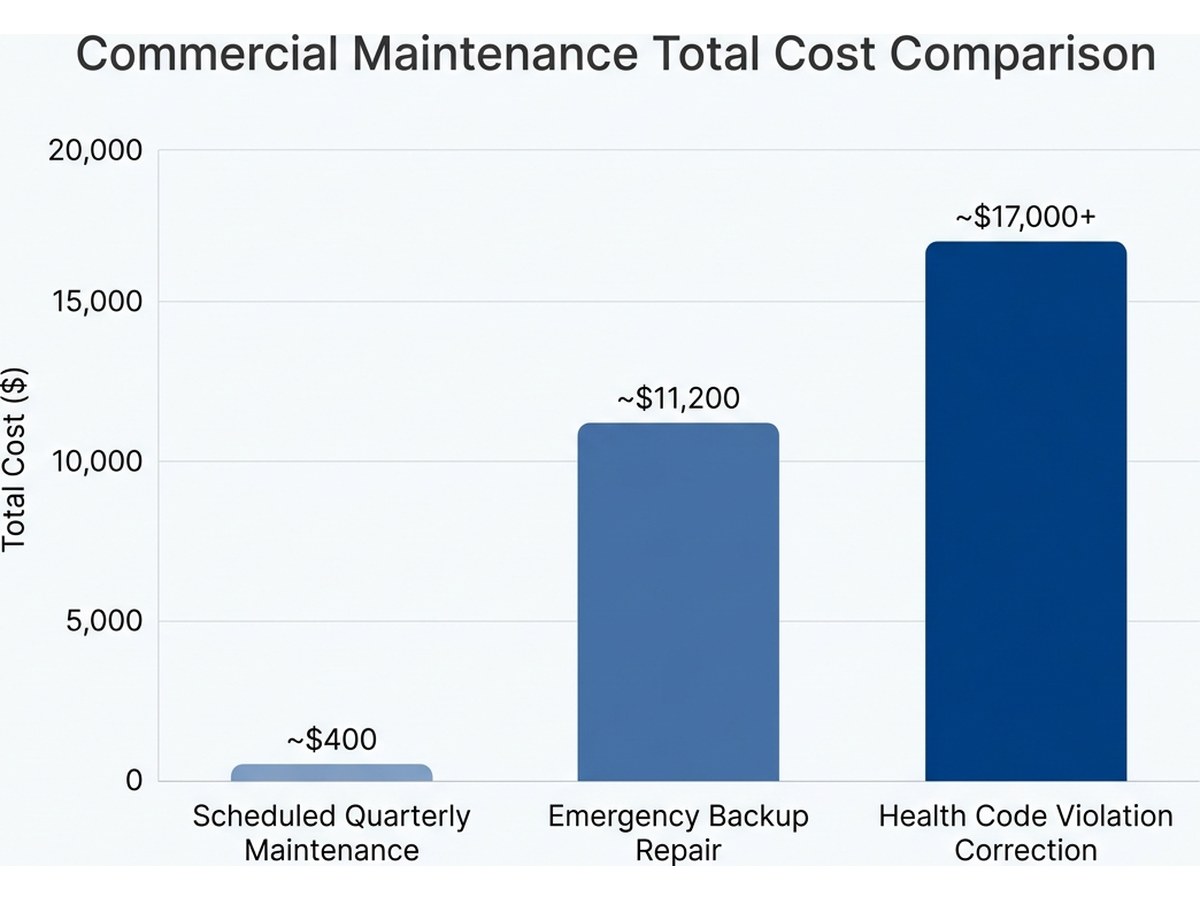
The financial impact extends beyond the emergency service call. According to National Restaurant Association operations research, the average restaurant loses $2,500 per hour when the kitchen is non-operational. A grease backup that takes four hours to clear (pump the interceptor, jet the lines, verify drainage, clean affected areas) costs $10,000 in lost revenue plus emergency service fees that run three times the cost of scheduled maintenance.
Columbus health inspectors can red-tag a facility for grease-related violations: overflowing interceptors, visible grease in floor drains, FOG buildup on equipment or walls, or lack of maintenance documentation. A red tag means you cannot operate until the violation is corrected and re-inspected.
Residential Plumbing Services for Greater Columbus Homeowners programs schedule grease trap service on a fixed calendar, document every service automatically, and track disposal through certified facilities. The operational advantage is predictable costs, zero emergency disruptions, and audit-ready records that satisfy health inspectors on the first visit.
Backflow prevention protects public water supplies from contamination, and health departments treat failures as high-priority violations. Every food service facility in Columbus with mechanical equipment connected to potable water (dishwashers, ice machines, carbonated beverage systems, pre-rinse spray valves) must install backflow prevention assemblies and test them annually. Ohio plumbing code and ASSE standards mandate that only state-certified testers can perform these inspections, and test reports must be filed with Columbus Public Utilities within 10 days of completion.
The testing process involves isolating each backflow device, using calibrated gauges to verify that check valves seat properly and differential pressure zones maintain required PSI separation, and documenting the results on state-approved forms. A passing test proves your device prevents reverse flow. A failed test means contamination pathways exist and must be repaired before the facility can operate legally.
Common failure modes include worn check valve seals, spring fatigue in relief valves, and debris accumulation that prevents complete closure. These mechanical issues don't announce themselves; a device can fail silently while your kitchen operates normally. The failure only becomes apparent during annual testing or when a health inspector questions your test records.
When a backflow device fails testing, the repair timeline matters. You must hire a licensed plumber to rebuild or replace the assembly, then schedule the certified tester to return for verification testing. This cycle typically takes 48 to 72 hours if parts are available and both the plumber and tester can coordinate schedules. During this period, health inspectors may require you to disconnect the affected equipment or, in severe cases, cease operations until the hazard is corrected.
Facilities that fail backflow tests during health inspections face immediate violations and potential closure orders. The inspector's report notes the failed device, the contamination risk it poses, and a compliance deadline (usually 48 hours for high-hazard situations). Missing this deadline can result in permit suspension, fines, and mandatory re-inspection fees.
The documentation requirement is absolute: every backflow assembly must have a current test certificate (within 12 months) showing the device passed or was repaired and retested. Health inspectors request these certificates by device serial number, and missing or expired records trigger automatic violations.
Drainage system failures in food service facilities rarely stem from sudden catastrophic breaks. Instead, they emerge gradually as kitchens add equipment, increase volume, or expand menus without upgrading the infrastructure to match. A drainage system that handled adequate capacity when the restaurant opened with 60 seats and a simple menu can become overwhelmed when the facility expands to 120 seats and adds a high-volume fryer station.
Ohio Plumbing Code specifies minimum drain line sizes based on fixture units (a measurement of drainage load). A three-compartment sink generates 6 fixture units, a commercial dishwasher adds 4 to 6 units, floor drains contribute 2 units each, and mop sinks, pre-rinse spray stations, and equipment drains add to the total. The drainage system must handle the combined peak flow when all fixtures discharge simultaneously during a busy service period. Undersized main drains (a common issue when buildings get repurposed from retail to restaurant use) create bottlenecks that manifest as slow drainage across all fixtures.
Proper drainage slope is non-negotiable. According to International Plumbing Code requirements, horizontal drain runs require a minimum 1/4 inch drop per linear foot to maintain gravity flow. Insufficient slope allows solids to settle in the pipe, creating accumulations that gradually restrict flow. Over months or years, these deposits harden and can only be removed through hydro-jetting or, in severe cases, pipe replacement.
Vent stack design affects drainage performance more than most operators realize. Proper venting prevents trap siphoning, allows air to enter the system as water drains (avoiding gurgling and vacuum conditions), and vents sewer gases safely above the roofline. Undersized or improperly located vents create negative pressure that slows drainage and can suck water out of fixture traps, breaking the barrier that prevents sewer gas from entering the kitchen.
When restaurants add equipment without drainage assessments, problems appear gradually. Installing a new high-volume dishwasher that discharges 50 gallons per minute into a drain line designed for 30 GPM creates backups during the dinner rush when other fixtures are also draining.
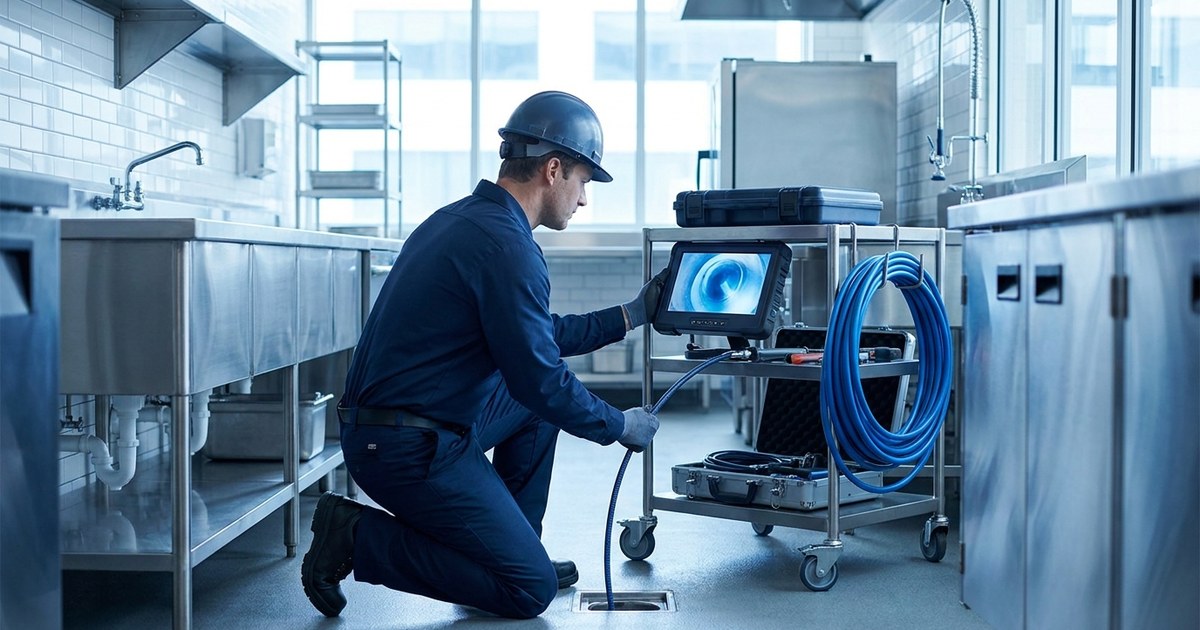
Reliable Local Service Backed by Professional Standards includes drainage system assessments that calculate current fixture unit load, measure actual flow rates during peak periods, and camera-inspect buried lines for slope and condition issues.
Hot water capacity failures shut down food service operations as quickly as drainage backups. FDA Food Code mandates minimum water temperatures at different fixture types: 180°F at commercial dishwasher final rinse for sanitization, 110°F minimum at handwashing sinks, and adequate supply for three-compartment sink operations that require filling all basins with 110°F water for washing and rinsing cycles. A facility that loses hot water capacity during breakfast prep or dinner service cannot legally operate until the system is restored.
Water heater sizing calculations must account for peak demand periods when multiple fixtures draw simultaneously. A 40-gallon residential-grade heater cannot support a commercial kitchen's needs. Most restaurants require 80 to 120-gallon commercial units with recovery rates (gallons per hour the heater can heat from incoming water temperature to setpoint) that match peak usage patterns.
Temperature maintenance matters as much as capacity. Dishwashers with booster heaters can raise inlet water temperature to the required 180°F final rinse, but only if supply water reaches the machine at adequate temperature (typically 140°F minimum). When supply temperature drops below this threshold, the booster heater cannot compensate, sanitization cycles fail, and the health department considers the dishwasher non-operational.
Water heater failures happen gradually (sediment accumulation reduces capacity over years) and suddenly (element failures, thermostat malfunctions, tank leaks). Facilities without preventive maintenance discover failures during service hours when demand peaks and the weakened system cannot keep up.
Preventive maintenance for water heaters includes annual sediment flushing (mineral deposits reduce tank capacity and insulate heating elements, reducing efficiency), anode rod inspection and replacement (sacrificial rods protect tanks from corrosion), temperature and pressure relief valve testing, and element testing on electric units. These services cost $200 to $400 annually but prevent the $3,000 to $8,000 emergency replacement costs when a neglected heater fails during peak season.
Health department inspections evaluate both physical infrastructure and documentation that proves continuous compliance. A facility with perfect plumbing systems but missing maintenance records can receive violations that require corrective action and follow-up inspections. Understanding what documentation is required, how long to retain it, and how to organize records for easy inspector access separates audit-ready facilities from those that scramble during inspections.
Grease trap maintenance logs must document every pump-out: date of service, volume removed, servicing company name and license number, and disposal facility where waste was delivered. Most jurisdictions require retaining these logs for 3 to 5 years. Inspectors verify that service intervals match facility volume and that no gaps exist in the maintenance schedule.
Backflow prevention test certificates require even stricter documentation. Every assembly must have a current certificate (within 12 months) showing: device serial number, test date, certified tester name and license number, test results (pass/fail/repaired), and any repairs performed before retesting. Columbus Public Utilities maintains a database of filed certificates and can identify non-compliant facilities by cross-referencing addresses against filed reports.
Plumbing service records create a maintenance history that demonstrates preventive care. Facilities should retain invoices and work orders showing: water heater maintenance (sediment flushing, anode replacement, temperature verification), drain line cleaning and inspections (hydro-jetting, camera inspections), fixture repairs, and any code upgrade work.
Water temperature logs provide additional proof of compliance. Many health departments require daily temperature checks at dishwashers and handwashing sinks, recorded in a log that inspectors review during visits. Consistent temperature readings within code requirements demonstrate proper water heater operation and fixture functionality.
The operational benefit of organized documentation extends beyond passing inspections. When a piece of equipment fails, maintenance history helps diagnose chronic issues versus one-time failures. Plumbing & Drain Professionals Blog providers that emphasize documentation give facility managers the data needed for strategic planning, not just reactive repairs.
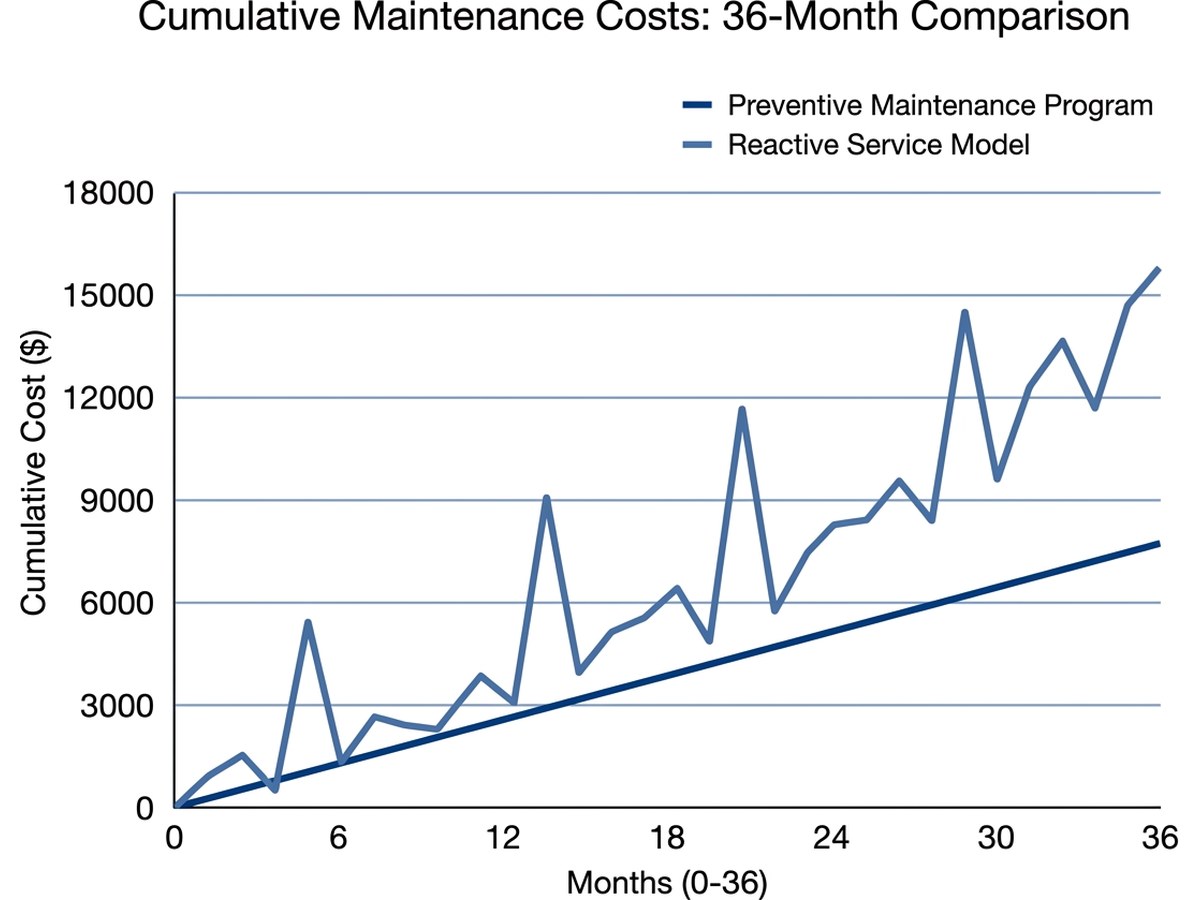
Reactive plumbing management guarantees two outcomes: emergency disruptions during peak service periods and avoidable health code violations. Facilities that operate on a break-fix model pay three times more for emergency service, lose revenue to unplanned downtime, and spend excessive time coordinating vendor responses. Preventive maintenance shifts this entire dynamic by scheduling service during planned windows, preventing failures before they disrupt operations, and maintaining continuous compliance documentation.
A comprehensive food service plumbing maintenance schedule covers all major systems on appropriate intervals. Grease trap pumping happens quarterly (or more frequently for high-volume facilities), scheduled during overnight hours when the kitchen is closed. Drain line inspection and hydro-jetting occurs biannually to clear accumulated debris before it restricts flow. Backflow testing happens annually on a rolling schedule that avoids the December inspection rush. Water heater maintenance (sediment flushing, anode inspection, element testing) occurs biannually. Fixture inspections catch small issues (dripping faucets, slow drains, worn seals) before they escalate.
The preventive advantage compounds over time. A facility that schedules grease trap service every 90 days will never experience the emergency backup that costs $1,200 in after-hours service plus $10,000 in lost revenue during a Saturday night shutdown. A facility that tests backflow assemblies in August has time to repair failures before the November health inspection cycle.
Preventive maintenance also creates the documentation trail that health inspectors expect. Service contracts generate automatic records for every completed task, building a compliance history that proves continuous attention to infrastructure. When an inspector requests grease trap logs, backflow certificates, and service records, facilities on preventive programs produce organized documentation immediately.
Cost predictability is another preventive maintenance benefit. Facilities that budget $2,400 annually for scheduled service avoid the unpredictable $8,000 emergency calls that blow through quarterly budgets. Scheduled maintenance allows proper planning for capital expenses (water heater replacements, drainage upgrades, fixture renewals) by identifying equipment nearing end-of-life before sudden failures force immediate unplanned expenditures.
PlumbGuard preventive maintenance programs bundle all required services into a single contract with transparent pricing, scheduled service windows that respect facility operations, same-day response for contract clients, and automated documentation. For restaurant operators and facility managers juggling multiple vendors and compliance deadlines, a single accountable partner who manages the entire plumbing compliance scope eliminates coordination overhead.
The service delivery model matters as much as the service scope. Facilities need commercial plumbing partners who understand that Saturday at 7 PM is not the same as Tuesday at 10 AM. Emergency response must happen on facility timelines, not residential convenience windows.
For multi-location restaurant operators and property management firms overseeing food service tenants, preventive maintenance programs scale across portfolios. A single contract can cover 5, 10, or 20 locations with coordinated scheduling, consistent documentation standards, and portfolio-level service reporting.
Restaurant and food service plumbing compliance is not a checklist you complete once and forget. It's an operational discipline that requires proper infrastructure sizing, scheduled preventive maintenance, documented service history, and vendor relationships built on accountability and facility operations expertise. The facilities that pass health inspections without violations, avoid emergency disruptions during peak service periods, and maintain predictable operational costs are the ones that treat plumbing compliance as a strategic function, not a reactive expense.
For facility managers and restaurant operators across Greater Columbus, the choice is clear: invest in preventive infrastructure or pay exponentially more for emergency repairs, downtime, and compliance violations. Grease trap failures, backflow test failures, drainage capacity issues, and hot water system breakdowns are all predictable and preventable with proper maintenance scheduling and commercial plumbing expertise.
Ready to build a compliance-ready plumbing maintenance plan for your restaurant or food service facility? Book an Appointment With Plumbing & Drain Professionals for PlumbGuard preventive service or schedule an on-site assessment with PDP's commercial plumbing team. Call 614-758-6237 or Request a Quote online.
Book a service request or consultation. We respond quickly and operate to professional service standards.
We’re Happy to Confirm
If your property is located in or around the Greater Columbus area and you don’t see your city listed, our team can quickly confirm coverage and service options.