8/21/26
6
min read

Emergency Plumber Columbus: What to Expect from a 24/7 Commercial Provider
When you call an emergency plumber in Columbus for a commercial property, expect a response-time commitment (typically 60–90 minutes for true 24/7 providers), transparent pricing before work begins, and technicians trained on commercial systems like backflow assemblies and main line shutoffs. The best providers own their crews, eliminate subcontracting delays, and document every job for compliance records.
That answer defines what separates real commercial emergency service from a residential handyman with an on-call line. For facility managers overseeing multi-tenant offices, retail centers, healthcare facilities, or restaurants in Columbus, Dublin, Gahanna, Reynoldsburg and Westerville, a plumbing failure outside business hours threatens operational continuity, tenant satisfaction, and health code compliance. Based on emergency response work with Columbus facility managers, the most urgent post-crisis question we hear is "how fast can you document this for our insurance adjuster?"
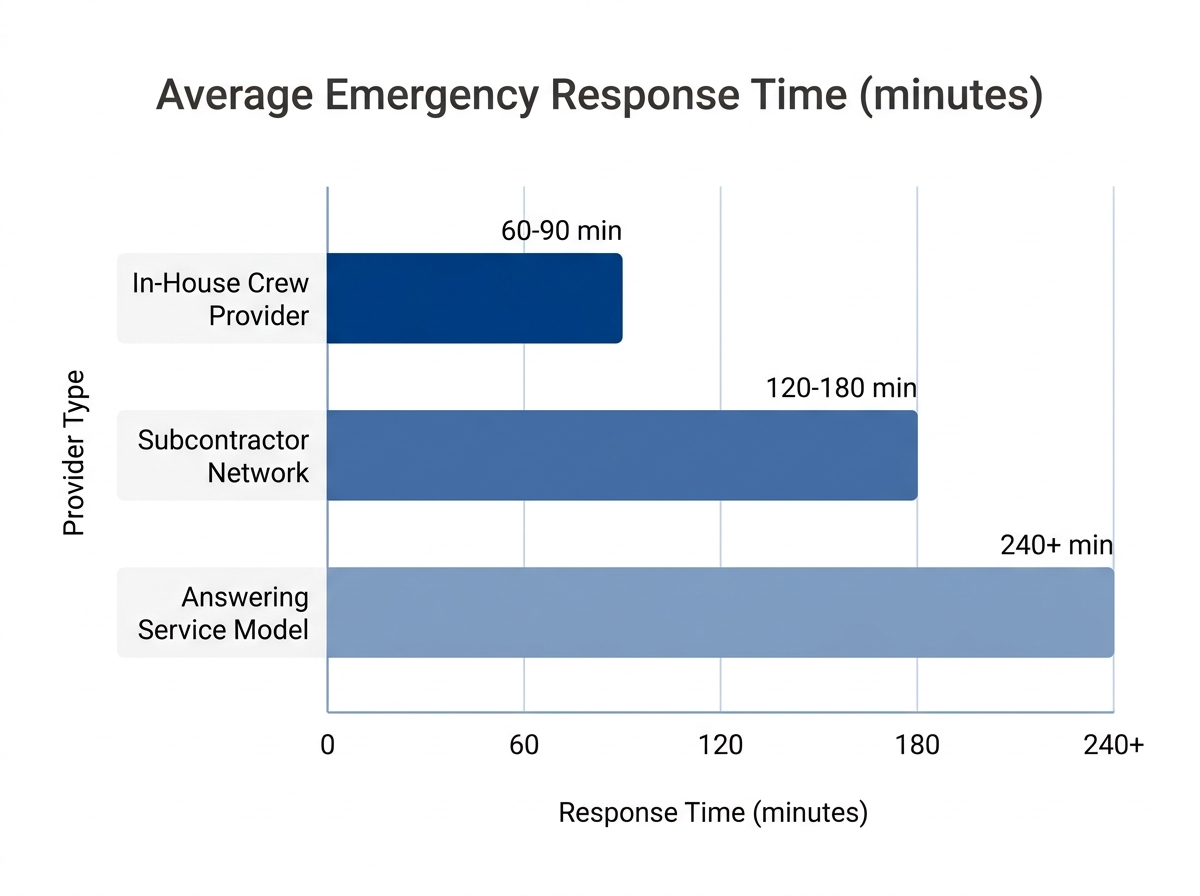
Many plumbers claim 24/7 availability, but calling their emergency line often routes to an answering service that promises "we'll try to find someone" with no guaranteed response window. True 24/7 commercial providers operate differently. Live dispatch connects you directly to an available crew, not a call center agent reading from a script. The truck is already en route before you hang up, tracked through ServiceTitan or similar systems that confirm arrival time in real time.
The operational structure matters. In-house crews mean the same licensed technicians who answer emergency calls perform the work. No waiting for a third-party contractor to wake up, drive from a different county, or determine whether your job is worth their time. The excavation truck, camera inspection equipment, and hydro-jetting rig are owned by the company, already staged, and ready to roll. Common commercial emergencies include main water line failures, backflow contamination events, and Grease Trap Cleaning for Commercial Properties in Columbus, each requiring immediate professional response according to industry analysis.
Industry data shows emergency plumbing calls peak outside business hours, and response times for metro markets average 60–90 minutes for reputable commercial providers . Ask any prospective emergency vendor for their stated response-time window in writing. If they hedge ("we try to get there as fast as possible"), you're talking to an answering service, not a committed crew. A 60-minute window means the difference between a contained incident and a building-wide shutdown that costs you tenants, revenue, and compliance standing.
Residential plumbers encounter simple fixture repairs and single-family drain clogs. Commercial facility emergencies demand a different skill set entirely. Main shutoff locations in multi-story buildings, backflow assembly isolations to prevent contamination, grease trap containment in food service facilities, and multi-tenant impact mitigation require technicians who understand facility downtime cost and compliance deadlines.
Every PDP technician understands this operational context. A backflow assembly failure at a restaurant doesn't just stop water service: it triggers health code violations that can close the facility until a licensed plumber replaces the valve and delivers a passing test report to the inspector.
Subcontracting introduces accountability gaps and equipment delays. The company you called doesn't own the crew performing the work, doesn't own the excavation truck or camera inspection rig, and can't guarantee the third-party contractor will prioritize your emergency over another job that pays better. In-house operations eliminate those delays. Hydro excavation, trenchless sewer replacement, camera inspection, and pressure washing are owned and operated by PDP. No waiting for a subcontractor to show up. No equipment rental delays. The crew that answers the phone owns the work from dispatch to documentation.
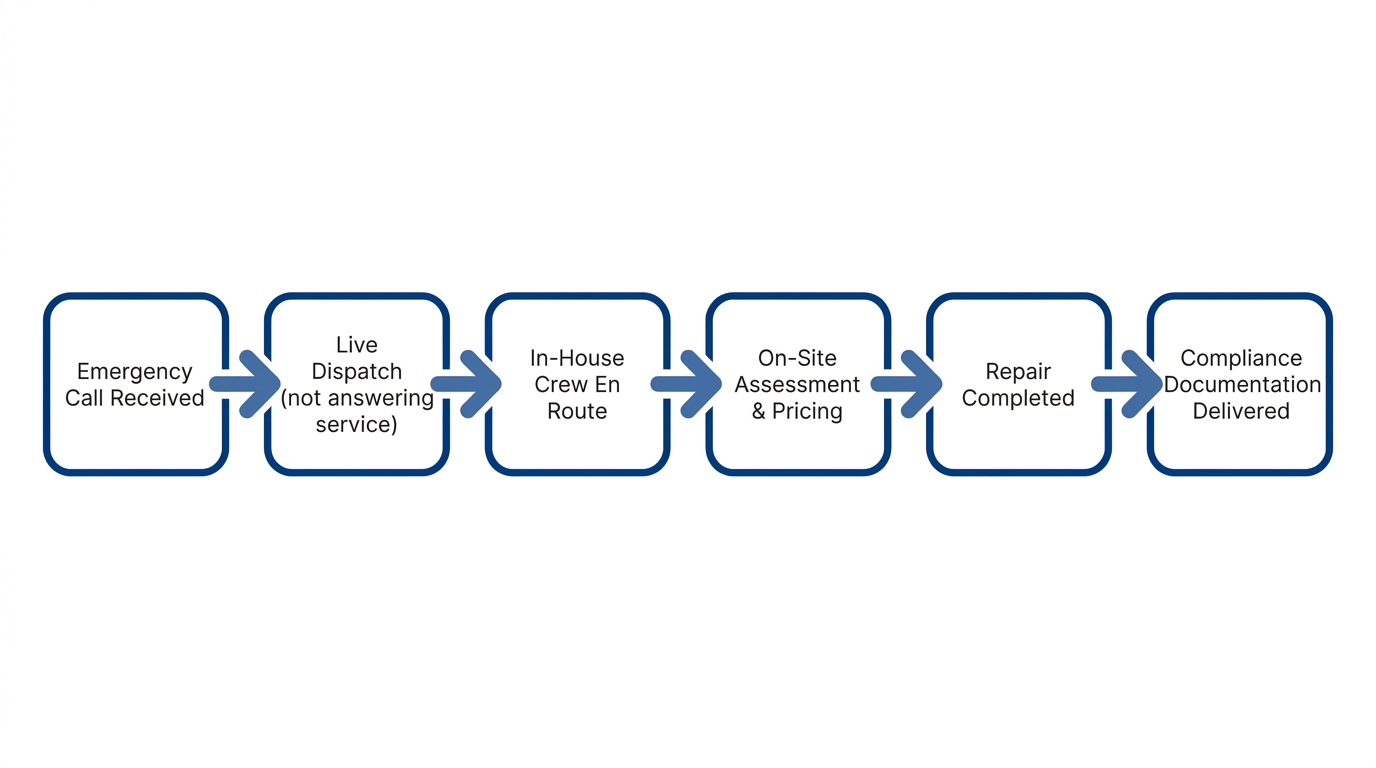
Fixing the pipe solves the immediate crisis. The work order, photo documentation, and compliance records solve the longer-term operational and audit requirements. Facility managers need backflow test reports for health inspectors, grease trap service logs for code compliance audits, and timestamped work orders for insurance claims and corporate office reviews.
In our work with Columbus facility managers, the most common post-emergency request isn't "send the invoice." It's "send the documentation our insurance adjuster needs" or "forward the compliance report to our health inspector by 9 a.m." ServiceTitan-powered systems track every job, timestamp every crew arrival and departure, capture before-and-after photos, and generate code-compliant service records automatically. Every crew member is licensed and insured. Every repair meets current Ohio plumbing code. Facility managers audit their plumbing compliance with confidence because the documentation exists, is accurate, and is delivered without delay. Regular Plumbing Maintenance for Residential and Commercial Properties in Columbus ensures these systems remain inspection-ready year-round.
Don't wait until 2 a.m. on a Sunday to evaluate your options. Vet potential emergency partners now, while the building is operational and you have time to ask the right questions:
Proactive planning reduces response time and minimizes damage when seconds count. Plumbing & Drain Services Across the Greater Columbus Area means your provider understands local codes and facility requirements region-wide.
A provider that welcomes these questions and answers them with specifics (not marketing fluff) earns your trust before you need it.
When an emergency strikes your Columbus facility, you need speed, transparency, commercial expertise, in-house accountability, and documentation you can audit. A true 24/7 commercial provider commits to 60–90 minute response windows, quotes pricing before work begins, dispatches licensed technicians trained on backflow assemblies and main line shutoffs, owns the excavation and inspection equipment, and delivers code-compliant service records the morning after the repair. That operational foundation protects facility uptime, tenant satisfaction, compliance standing, and budget predictability.
Don't wait for a 2 a.m. crisis to discover your "emergency" vendor is an answering service routing calls to whoever picks up. Talk to PDP now to establish the 24/7 partnership your facility deserves.
Book a service request or consultation. We respond quickly and operate to professional service standards.
We’re Happy to Confirm
If your property is located in or around the Greater Columbus area and you don’t see your city listed, our team can quickly confirm coverage and service options.