2026-09-25
23
min read
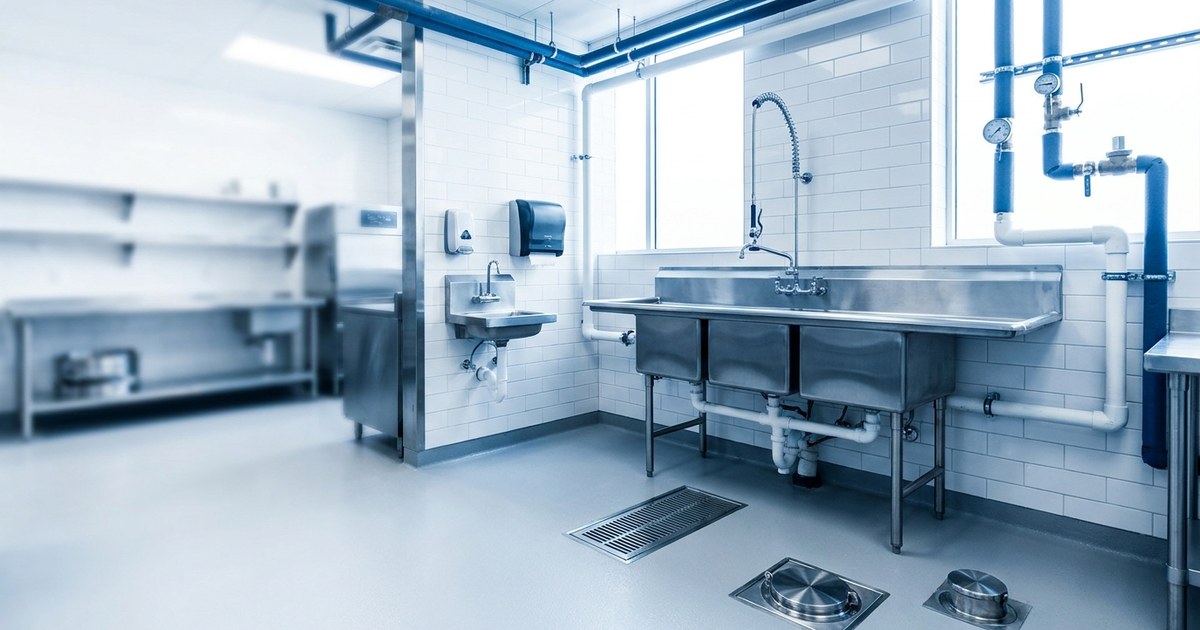
Food service facilities in Columbus must clean grease traps every 30–90 days depending on trap size and kitchen volume, as required by Columbus Public Health and Ohio EPA regulations. Proper maintenance prevents sewer line blockages, health code violations, and emergency shutdowns. Documented service records are mandatory for compliance audits.
For restaurant managers and facility operators across Greater Columbus, grease trap compliance sits at the intersection of regulatory obligation and operational continuity. When a grease trap fails during dinner service, the consequences cascade: health department violations, emergency plumbing shutdowns, and revenue loss measured in thousands per hour. Yet most facilities treat grease trap service as a standalone vendor relationship, disconnected from the broader commercial plumbing maintenance that protects kitchen operations. This guide explains Columbus-area grease trap compliance requirements, the operational failures that result from neglect, and how Proactive Plumbing Maintenance Built for Business Continuity transforms grease trap service from reactive crisis to scheduled infrastructure work.
Columbus Public Health and Franklin County Health Department regulations mandate grease trap cleaning on documented intervals, not when a facility manager remembers to schedule it. The legal foundation comes from Ohio Administrative Code provisions governing food service establishment sanitation and the Ohio EPA's fats, oils, and grease (FOG) discharge standards designed to protect municipal sewer systems. For commercial kitchens in Columbus, Worthington, Dublin, Gahanna, and Reynoldsburg, these regulations translate to a specific operational requirement: grease traps must be cleaned before FOG accumulation reaches 25% of trap capacity, typically every 30 to 90 days depending on kitchen volume.
Health inspectors don't evaluate grease traps based on visible cleanliness. They verify documented service intervals, review waste hauler manifests, and measure FOG accumulation levels against capacity thresholds. A restaurant operating a 1,000-gallon grease trap at high volume may need 30-day service intervals to maintain compliance. A lower-volume café with a 500-gallon trap might sustain 60-day intervals. The determining factor is not calendar convenience but operational reality: how quickly does your kitchen fill the trap's capacity?
Health code requirements for commercial food service extend beyond grease trap intervals to include backflow prevention, cross-connection control, and wastewater discharge standards. Grease trap compliance is one component of a facility plumbing compliance program that health departments audit as a system, not a checklist. When inspectors find gaps in grease trap documentation, they scrutinize the entire plumbing maintenance history. A facility that can't prove trap compliance raises immediate questions about backflow testing, drain line condition, and upstream plumbing accountability.
In our work with Columbus-area restaurant clients, facilities that schedule grease trap service every 30 to 60 days experience 70% fewer emergency drain line failures than those relying on reactive service. The reason is straightforward: scheduled plumbing maintenance prevents the upstream conditions that accelerate trap FOG accumulation and trigger sewer line backups. A grease trap is not a standalone appliance. It's the final capture point in a commercial kitchen drainage system that includes dishwasher discharge lines, prep sink drains, floor drains, and mop sinks. When upstream plumbing fails, FOG bypasses the trap or overwhelms its capacity, creating compliance violations and operational failures simultaneously.
The operational cost of non-compliance extends beyond fines. Health department violations can trigger reinspection fees, mandatory closure until remediation is verified, and reputational damage that affects permit renewals and insurance underwriting. For multi-unit operators, a single location's grease trap violation can elevate scrutiny across the entire portfolio. Columbus Public Health maintains a public database of food service inspection results. A failed grease trap inspection appears in the same record as critical food safety violations, visible to customers and stakeholders who don't distinguish between kitchen hygiene and plumbing infrastructure.
A commercial grease trap intercepts fats, oils, and grease from kitchen wastewater before discharge enters the municipal sewer system. The physics are simple: FOG is lighter than water and solidifies as it cools. Wastewater flows into the trap, slows down in the chamber, and separates by density. FOG floats to the surface, solids settle to the bottom, and clarified water exits through the outlet baffle into the sewer line. Properly sized and maintained, a grease trap captures 90% or more of kitchen FOG before it reaches public infrastructure.
Neglect disrupts this process in three stages. First, FOG accumulation reduces the trap's effective volume. As the grease layer thickens, the flow path narrows, water velocity increases, and FOG begins to escape through the outlet. Second, solid waste accumulation at the trap bottom creates anaerobic conditions that generate hydrogen sulfide gas, corrode piping, and create the distinctive sewer odor that signals trap failure. Third, when FOG accumulation exceeds the trap's capture capacity, discharged grease enters the building's drain lines and municipal sewer, where it cools, solidifies, and creates blockages that require emergency excavation and hydro-jetting.
The timeline from trap neglect to operational failure is predictable. A high-volume restaurant operating a grease trap at 30-day service intervals will begin experiencing slow drains and odor issues within 45 days of a missed cleaning. At 60 days past due, FOG discharge into drain lines creates partial blockages that manifest as backing sinks during peak service hours. At 90 days overdue, complete sewer line blockage is likely, requiring emergency response that costs three to five times more than scheduled maintenance. Commercial plumbing inspections reveal that most emergency grease trap failures share a common cause: service intervals stretched beyond operational capacity because no documented maintenance schedule existed.
Health department violation and potential shutdown represents the first failure mode. When inspectors measure FOG accumulation above the 25% capacity threshold or find gaps in service documentation, they issue a critical violation that requires immediate correction. Repeat violations trigger escalating penalties: reinspection fees starting at several hundred dollars, mandatory closure until compliance is verified, and potential permit revocation for chronic non-compliance. For a restaurant generating $10,000 in daily revenue, a three-day closure costs $30,000 before factoring in spoiled inventory, lost labor hours, and customer attrition.
Sewer line blockage and emergency plumbing failure is the second mode. FOG that escapes a neglected trap solidifies in drain lines, creating blockages that prevent all wastewater discharge. Sinks back up, floor drains overflow, dishwashers shut down, and kitchen operations halt. Emergency service calls during peak hours cost two to three times standard rates, and excavation to clear main line blockages can run $5,000 to $15,000 depending on depth and access. The operational disruption compounds the financial cost: a dinner service shutdown on a Saturday night eliminates the week's most profitable revenue window.
Environmental discharge violations represent the third mode. Ohio EPA regulations prohibit FOG discharge into municipal sewers above specified limits. When grease trap failures cause FOG to enter public infrastructure, facilities face state-level enforcement that includes mandatory remediation, discharge monitoring requirements, and fines that escalate with violation severity. Multi-unit operators face additional scrutiny: an EPA violation at one location triggers compliance audits across the entire portfolio, creating cascading operational disruption and legal exposure.
Food service plumbing systems fail in predictable patterns when maintenance schedules don't align with operational reality. The restaurants that avoid these failure modes treat grease trap service as infrastructure maintenance with documented intervals, not discretionary housekeeping scheduled when convenient.
Columbus Public Health requires food service establishments to maintain grease traps "in good repair and working order" with cleaning performed at intervals sufficient to prevent FOG accumulation above 25% of trap capacity. The regulation intentionally avoids fixed calendar intervals because kitchen volume varies. A 24-hour diner with continuous fryer use fills a grease trap faster than a coffee shop serving breakfast and lunch. Health inspectors evaluate whether the facility's actual service interval prevents capacity exceedance, not whether it matches an arbitrary 30-day or 90-day schedule.
Franklin County Health Department inspection protocols require facilities to produce documented service records on demand. Acceptable documentation includes service invoices showing date, trap capacity, FOG volume removed, waste hauler manifest numbers, and the servicing contractor's license information. Generic receipts that say "grease trap cleaning" without capacity data or manifest tracking fail the documentation standard. Inspectors look for a documented pattern: service dates that align with the facility's operational intensity and FOG removal volumes that stay below the 25% threshold.
Dublin and Worthington operate under Franklin County Health Department jurisdiction and follow the same grease trap standards as Columbus-proper facilities. Gahanna food service establishments comply with identical Ohio Department of Health rules enforced through county-level inspection. The regulatory consistency across Greater Columbus means multi-location operators can implement standardized grease trap maintenance schedules across their portfolio without navigating jurisdictional variations. The Plumbing & Drain Services Across the Greater Columbus Area operate within this unified compliance framework, where documented service intervals and waste hauler coordination meet inspector expectations regardless of city boundaries.
Service log documentation is the first checkpoint. Inspectors verify that cleaning dates align with operational intensity and that no gaps exceed the facility's stated service interval. A restaurant claiming 60-day intervals must show service records at approximately 60-day spacing without unexplained lapses. Missing service dates or irregular spacing raise immediate questions about whether the facility is operating reactively instead of following a documented maintenance schedule.
Trap capacity versus cleaning interval compliance is the second checkpoint. Inspectors may physically measure FOG accumulation during the audit or review service records to verify that removed FOG volumes stay below 25% of trap capacity. A 1,000-gallon trap with service records showing 400-gallon FOG removal indicates the facility is allowing accumulation to reach 40% before scheduling service, well above the compliance threshold. This finding triggers a critical violation regardless of whether the trap was recently cleaned.
FOG accumulation levels at the time of inspection represent the third checkpoint. If inspectors observe visible grease accumulation, detect sewer odor, or measure FOG depth above regulatory thresholds, they issue a violation even if the next scheduled service is imminent. Compliance is measured at the moment of inspection, not against future intentions. A facility that schedules service the day after an inspection still fails the audit if FOG levels exceed limits on inspection day.
Downstream plumbing condition is the fourth checkpoint. Inspectors look for slow drains, standing water in floor drains, visible grease buildup in sink traps, and sewer odors that indicate FOG is escaping the grease trap and accumulating in drain lines. These observations signal that the trap's service interval is inadequate for the facility's actual FOG load, regardless of what the schedule claims. Regulatory compliance standards evaluate the outcome, not the documented intent.
Waste disposal records complete the audit. Facilities must produce waste hauler manifests that track FOG disposal through licensed contractors to approved disposal sites. Generic invoices without manifest numbers fail this standard because they don't prove proper waste handling. Health departments coordinate with Ohio EPA to verify that haulers hold current waste transport licenses and that disposal sites accept commercial kitchen FOG under state regulations.
Cleaning frequency must match kitchen volume, not calendar convenience. High-volume operations (full-service restaurants, hotel kitchens, institutional cafeterias) typically require 30-day intervals to prevent FOG accumulation above the 25% threshold. Medium-volume facilities (fast-casual restaurants, coffee shops with food service, small hotel breakfast operations) often sustain 45 to 60-day intervals. Lower-volume operations (coffee shops, juice bars, small cafés with minimal fryer use) may meet compliance with 90-day service. The determining variables are fryer output, dishwasher load, and prep sink drainage volume. A facility manager who doesn't know the trap's capacity in gallons and can't estimate daily FOG generation cannot set an appropriate service interval.
Scheduling around kitchen operations minimizes disruption. Grease trap service requires pump truck access to the trap location, typically 60 to 90 minutes of on-site work, and temporary closure of affected drains during pumping. Facilities that schedule service during off-peak hours (late morning after breakfast, mid-afternoon before dinner prep, overnight for 24-hour operations) avoid interrupting revenue-generating service windows. The operational cost of a Monday lunch shutdown to clean a grease trap often exceeds the service cost itself. Grease trap maintenance protocols recommend coordinating service timing with the facility's slowest operational period to preserve kitchen capacity during peak demand.
Coordination with drain line jetting extends the value of each service visit. A grease trap cleaning addresses FOG accumulation in the trap chamber but doesn't clear FOG that has already entered downstream drain lines. Facilities that combine trap cleaning with hydro-jetting of drain lines from the trap to the main sewer connection eliminate accumulated FOG before it hardens into blockages. The incremental cost of jetting during a scheduled trap service visit is typically 30% to 40% of the cost of an emergency jetting call when drain lines fail. Operationally, this coordination prevents the scenario where a facility cleans the trap but experiences sewer line backup two weeks later because FOG in the drain lines wasn't addressed.
Inspection of upstream plumbing identifies issues before they accelerate FOG generation. Dishwasher discharge lines with soap buildup, prep sink drains with food debris accumulation, and floor drains with standing water all contribute FOG and solids to the grease trap faster than normal operations predict. A grease trap service provider who only pumps the trap and leaves won't identify a leaking dishwasher connection that's dumping hot soapy water (and emulsified grease) into the trap 24 hours a day. Facilities benefit from service providers who inspect upstream plumbing during each visit and document conditions that affect trap performance.
Waste hauler coordination ensures compliance documentation closes the loop. The service contractor removes FOG from the trap, but the waste hauler transports it to a licensed disposal facility and generates the manifest that proves proper handling. Facilities that use separate contractors for trap pumping and waste hauling face documentation gaps when manifests don't match service dates or when haulers change without updating facility records. Integrated service (where the same contractor handles pumping, hauling, and manifest generation) eliminates this coordination gap and produces audit-ready documentation automatically.
A 30-day service interval makes sense only if the facility generates FOG at a rate that fills 25% of trap capacity in 30 days. A coffee shop with minimal fryer use and low dishwasher volume may generate 50 gallons of FOG per month in a 500-gallon trap (10% capacity), making 90-day service intervals compliant and cost-effective. A high-volume restaurant with continuous fryer operation may generate 200 gallons of FOG per month in a 1,000-gallon trap (20% capacity), requiring 45-day intervals to stay under the 25% threshold. Calendar-based scheduling that ignores actual FOG generation leads to one of two outcomes: overcleaning that wastes money or undercleaning that violates compliance.
Our PlumbGuard® clients receive service intervals calibrated to their documented FOG generation rate, not generic industry averages. After the initial service visit measures trap capacity and FOG accumulation, we calculate the interval that keeps accumulation below 20% (a safety margin under the 25% regulatory threshold) and schedule recurring service automatically. Facility managers receive advance notification, service documentation after each visit, and interval adjustments when kitchen volume changes (seasonal menu shifts, catering additions, equipment upgrades that affect FOG output). This usage-driven model prevents both compliance gaps and unnecessary service frequency.
Grease trap cleaning is one service within a facility plumbing maintenance program, not a standalone vendor relationship. The same commercial kitchen that requires grease trap service also needs drain line jetting to clear FOG accumulation, backflow testing to meet cross-connection control requirements, water heater maintenance to sustain dishwasher temperature compliance, and emergency response when plumbing failures occur outside scheduled maintenance windows. Facilities that treat each service as a separate vendor relationship face coordination gaps, duplicated diagnostic costs, and accountability fragmentation when failures occur.
Proactive plumbing maintenance built for business continuity integrates grease trap service with the broader commercial plumbing lifecycle. Our PlumbGuard® program schedules grease trap cleaning, drain line jetting, backflow testing, and plumbing inspections on coordinated intervals documented in a facility-specific maintenance calendar. Every service visit generates documentation that feeds compliance audit readiness: trap service logs with waste manifests, backflow test certifications, hydro-jetting reports with before/after flow measurements, and inspection findings that identify emerging issues before they trigger failures.
Documented service intervals simplify compliance audit preparation. When a health inspector requests grease trap service records, PlumbGuard® clients access a digital service history showing every trap cleaning date, FOG volume removed, waste hauler manifest number, and technician certification. The same system tracks backflow testing dates, drain line jetting intervals, and emergency service calls, creating a comprehensive plumbing compliance record accessible from any device. Facilities that operate without documented maintenance programs scramble to assemble paperwork during audit week, often discovering gaps in service records that trigger violations and reinspection requirements.
The operational value extends beyond audit readiness. Scheduled maintenance prevents the emergency failures that cost three to five times more than planned service and disrupt kitchen operations during peak revenue windows. A grease trap overflow during Saturday dinner service doesn't wait for Monday morning business hours. Our 24/7 emergency response with no after-hours fees means PlumbGuard® facilities receive the same transparent pricing and licensed crew response whether the call comes at 2:00 p.m. Tuesday or 10:00 p.m. Friday. The program eliminates the operational chaos of juggling multiple contractors, each with different service terms, response capabilities, and documentation standards.
Licensed plumbing contractor versus standalone hauler represents the first evaluation criterion. A waste hauler pumps grease traps and hauls FOG to disposal facilities but typically doesn't inspect upstream plumbing, coordinate drain line jetting, or integrate trap service with backflow testing and facility maintenance schedules. A licensed commercial plumbing contractor who offers grease trap service (as one component of commercial plumbing capability) brings upstream inspection, drain line maintenance, emergency response infrastructure, and accountability for the entire facility plumbing system. The service cost may appear similar, but the operational value differs substantially.
Documented service with compliance-ready logs is the second criterion. Ask prospective vendors: "What documentation do you provide after each service visit?" Acceptable answers include service invoices with trap capacity, FOG volume removed, waste hauler manifest numbers, disposal site verification, and technician license information. Generic receipts that say "grease trap cleaning plus a dollar amount" fail the compliance documentation standard. Facilities facing health department audits need records that prove not just that service occurred but that it occurred at intervals appropriate to trap capacity and that waste was handled through licensed channels.
24/7 emergency response for trap failures is the third criterion. Grease traps don't fail on schedule. When a trap overflows during dinner service, the facility needs a contractor who answers emergency calls, dispatches a licensed crew immediately, and resolves the failure without after-hours penalty pricing. Ask: "What's your emergency response time, and do you charge after-hours fees?" Standalone haulers often subcontract emergency work to plumbing companies (adding a coordination layer and cost markup) or don't offer emergency response at all. Reliable local service backed by professional standards means the same team that handles scheduled trap cleaning responds to emergency failures with owned equipment and transparent pricing.
Waste disposal certifications verify regulatory compliance. All grease trap service providers must hold waste transporter licenses issued by Ohio EPA and must dispose of FOG at facilities permitted to accept commercial kitchen waste. Ask: "Can you provide your waste transporter license number and disposal site certifications?" Contractors who can't produce this documentation operate outside regulatory compliance, exposing the facility to environmental violations when Ohio EPA audits waste disposal chains. The cheapest service quote means nothing if it comes from an unlicensed hauler whose disposal practices trigger state enforcement.
Integration with broader facility plumbing maintenance distinguishes strategic service partners from transactional vendors. Ask: "Do you offer drain line jetting, backflow testing, and plumbing inspections in addition to grease trap service, and can you coordinate all of them on a documented maintenance schedule?" Facilities benefit from single-source accountability where the contractor who cleans the trap also inspects dishwasher drains, jets the main line, tests backflow preventers, and responds to emergency plumbing failures. This integration eliminates vendor coordination overhead and creates a unified compliance documentation system that simplifies audit preparation.
A plumbing contractor who offers grease trap service as one component of commercial plumbing capability brings diagnostic value that standalone haulers can't match. During each trap cleaning visit, our technicians inspect dishwasher discharge lines for soap buildup that emulsifies grease and accelerates FOG generation, check floor drains for standing water that signals downstream blockages, examine prep sink connections for leaks that dump clean water into the trap (diluting capacity), and assess the condition of trap inlet and outlet baffles that control flow separation. These upstream issues directly affect how quickly the trap fills and whether the current service interval remains appropriate.
When upstream inspection identifies emerging failures (a leaking dishwasher connection, a partially blocked drain line, a corroded trap baffle), the same crew resolves them during the service visit or schedules corrective work on the facility's maintenance calendar. Standalone haulers who only pump traps can't diagnose plumbing issues, can't repair them, and often don't notice conditions that accelerate trap FOG accumulation. The facility pays for trap cleaning at the scheduled interval, then faces emergency plumbing failures weeks later because the root cause wasn't identified or addressed.
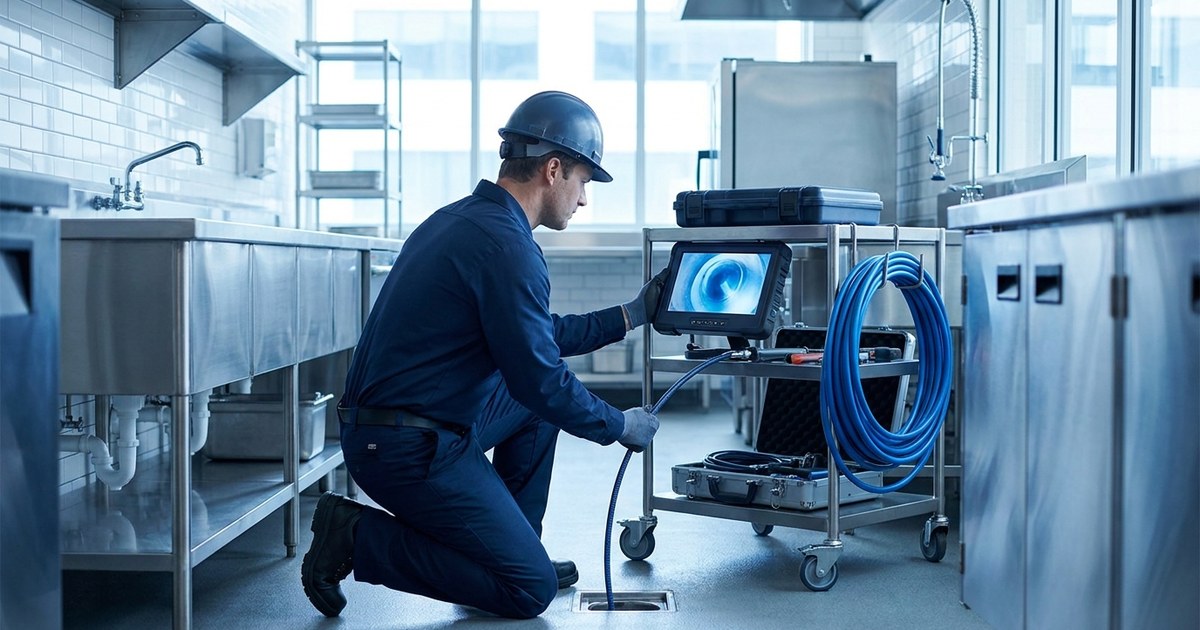
The operational model matters. PDP owns the excavation equipment, the hydro-jetting rigs, the camera inspection systems, and the vacuum trucks used for grease trap service. We don't subcontract waste hauling or emergency response. The same licensed commercial plumbing team that cleans your grease trap handles your drain line jetting, your backflow testing, your water heater maintenance, and your 2:00 a.m. sewer line emergency. This in-house capability eliminates the coordination gaps, markup layers, and accountability fragmentation that multi-vendor models create. When a service failure occurs, one phone call reaches the team accountable for the entire facility plumbing system.
Waiting for trap overflow before scheduling service is the most expensive mistake facility managers make. By the time a grease trap overflows into the kitchen or backs up the sewer line, FOG accumulation has exceeded regulatory thresholds, downstream drain lines contain hardened grease blockages, and operational disruption is unavoidable. Emergency grease trap service during a backup costs two to three times standard rates, requires immediate kitchen shutdown, and often reveals drain line damage that needs excavation and repair. The compliance violation has already occurred. Emergency service remediates the consequence but doesn't erase the audit finding.
Missing documentation represents the second common error. Facilities that can't produce service logs, waste hauler manifests, or disposal site certifications during health department inspections receive critical violations regardless of whether the trap was recently cleaned. Grease trap maintenance best practices require maintaining a documented service history that proves compliance intervals, FOG removal volumes, and proper waste disposal. Generic invoices without capacity data or manifest tracking don't meet this standard. The service occurred, but the facility can't prove it in a format inspectors accept.
Relying on kitchen staff to monitor trap condition instead of vendor documentation is the third mistake. Kitchen managers have operational expertise in food service, not plumbing infrastructure assessment. Asking a sous chef to "check the grease trap" and report when it looks full produces unreliable scheduling based on visible symptoms that appear only after compliance thresholds are exceeded. Professional grease trap service includes capacity measurement, FOG volume calculation, and interval recommendations based on actual accumulation rates, not subjective observation. Facilities that depend on staff monitoring typically operate on reactive schedules that lag behind regulatory requirements.
Ignoring upstream plumbing issues that accelerate trap FOG accumulation is the fourth error. A dishwasher with a malfunctioning rinse cycle dumps extra hot water and emulsified grease into the trap. A floor drain with a partial blockage causes standing water that creates anaerobic conditions in the trap. A prep sink with a slow drain indicates FOG buildup in the line between the sink and the trap. These conditions change how quickly the trap fills and whether the current service interval remains adequate. Facilities that treat grease trap service as a standalone task (pump the trap, done) miss the upstream causes of accelerated FOG generation and experience compliance gaps despite regular service.
Choosing service providers based solely on lowest price is the final mistake. The cheapest grease trap cleaning quote often comes from haulers who provide minimal documentation, skip upstream plumbing inspection, don't coordinate drain line jetting, operate without proper waste disposal certifications, or charge premium rates for emergency response when scheduled service proves inadequate. The $50 savings per service visit disappears during the first emergency call or the first compliance violation triggered by inadequate documentation. Facility managers who evaluate service value (compliance documentation, upstream inspection, emergency response capability, integration with facility maintenance) rather than transaction cost alone avoid the hidden costs of cheap service.
Plumbing & Drain Professionals provides grease trap cleaning as an integrated component of commercial plumbing maintenance for food service facilities throughout Columbus, Worthington, Dublin, Gahanna, and Reynoldsburg. Our service model combines scheduled trap cleaning on PlumbGuard® intervals, documented service logs with waste manifests for audit readiness, coordination with drain line jetting and backflow testing, 24/7 emergency response with no after-hours fees, and licensed commercial plumbing expertise that inspects upstream conditions during every service visit. We don't subcontract waste hauling or emergency work. Our team brings decades of combined experience owning the equipment, performing the service, and maintaining accountability for compliance documentation and operational outcomes.
Every grease trap service visit generates documentation that meets Columbus Public Health and Franklin County Health Department audit standards: service date, trap capacity, FOG volume removed, waste hauler manifest number, disposal site verification, and technician license information. PlumbGuard® clients receive digital service records accessible from any device, compliance calendars that track upcoming service deadlines, and automatic scheduling that prevents interval gaps. When health inspectors request documentation during facility audits, our clients produce comprehensive compliance records without scrambling through filing cabinets or chasing down vendor paperwork.
Our service coverage spans the Greater Columbus area with particular depth in high-density food service markets. Commercial plumbing services in Gahanna support the restaurant and retail corridor along Hamilton Road and Morse Road. Dublin food service facilities benefit from our integration with corporate facility management programs common in the Bridge Park and Riverside Crossing development zones. Worthington's historic downtown restaurant district and Worthington Hills commercial area receive the same documented service intervals and emergency response capability as Columbus-proper locations. Reynoldsburg industrial kitchen operations (commissary kitchens, institutional food service) access our commercial excavation and underground infrastructure expertise when grease trap issues extend into main line failures.
The operational difference comes from treating grease trap service as one component of a facility plumbing partnership, not a standalone transaction. When we clean your grease trap, we also inspect your dishwasher drains, check your floor drain condition, assess your prep sink flow rates, and document findings that affect your service interval or indicate emerging plumbing issues. If we identify a problem during the service visit, the same licensed crew resolves it or schedules corrective work on your maintenance calendar. You don't call a different contractor, explain the issue again, and pay diagnostic fees twice. One team, one accountability chain, one documentation system.
Emergency response infrastructure ensures operational continuity when failures occur despite preventive maintenance. Our 24/7 dispatch connects you to the same commercial plumbing crew that handles your scheduled service, not an answering service that routes calls to subcontractors. We respond to grease trap overflows, sewer line backups, and drain failures with owned equipment and transparent pricing that doesn't include after-hours penalties. A Saturday night trap overflow receives the same response time and pricing structure as a Tuesday afternoon scheduled service. For facility managers responsible for keeping kitchens operational, this response capability eliminates the revenue loss and operational chaos of waiting until Monday morning for emergency plumbing support.
Whether your facility needs to establish initial compliance documentation, recover from a failed health department audit, or integrate grease trap maintenance with broader commercial plumbing service, our team brings the infrastructure and accountability that residential plumbing services for Greater Columbus homeowners have relied on for years, now applied to commercial food service operations. The same 24/7 emergency response, transparent pricing, and documented maintenance intervals that protect homeowners from plumbing failures protect commercial kitchens from operational shutdowns and compliance violations.
Food service operators looking to streamline vendor relationships appreciate that one call to PDP covers grease trap service, drain line jetting, backflow testing, water heater maintenance, and emergency plumbing response. Facilities that previously juggled three to five contractors for different plumbing needs now work with a single team that coordinates all services on an integrated maintenance calendar. The operational simplification extends to billing: one invoice, one payment portal, one documentation system for all facility plumbing services. Multi-location operators applying lessons from our Dublin service area can replicate the same service model across their entire Columbus-area portfolio without renegotiating vendor terms at each location.
For facilities considering PlumbGuard® enrollment, the value proposition is straightforward: predictable monthly cost replaces unpredictable emergency bills, scheduled maintenance prevents operational disruptions, documented service intervals ensure audit readiness, and 24/7 emergency response protects revenue during failures. Compare that model to reactive service where grease trap cleanings happen when management remembers, documentation exists only if you kept the invoice, emergency response comes from whoever answers the phone at 9:00 p.m. Saturday, and each service call triggers a new vendor relationship with separate terms and pricing. The operational risk and hidden costs of reactive service compound over time. The documented maintenance and accountability of PlumbGuard® eliminate that risk for a fixed monthly investment.
If your Columbus food service facility needs to establish grease trap compliance, recover from a health department violation, or integrate trap service with comprehensive commercial plumbing maintenance, book an appointment with Plumbing & Drain Professionals today. Our commercial plumbing team will assess your current trap condition, recommend appropriate service intervals based on your kitchen volume, provide a detailed maintenance proposal, and deliver documented compliance from day one.
Need grease trap service that keeps your Columbus food service facility compliant and operational? Request a quote from PDP's commercial plumbing team today: documented maintenance, 24/7 emergency support, and no after-hours fees.
By PDP
Book a service request or consultation. We respond quickly and operate to professional service standards.
We’re Happy to Confirm
If your property is located in or around the Greater Columbus area and you don’t see your city listed, our team can quickly confirm coverage and service options.