2026-10-16
9
min read
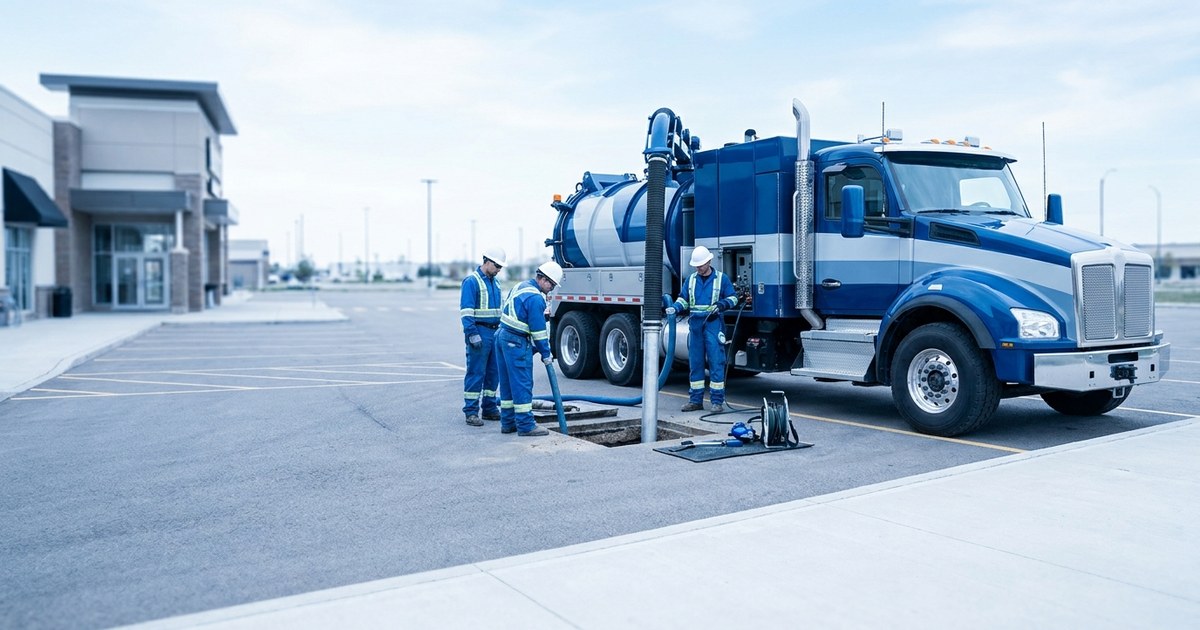
Hydro excavation equipment uses pressurized water and a vacuum to expose buried pipes and utilities without a backhoe. In commercial plumbing, that lets a crew dig precisely around live utilities, paved lots, and building slabs. PDP owns the truck and the crew, so facility managers deal with one accountable team, not a subcontractor.
By PDP
Most commercial plumbing problems are solved above ground. The ones that hurt sit under the lot, the slab, or the kitchen floor. When a sewer or water line fails there, someone has to dig, and that is where schedules stall. The plumber waits on an excavation sub. The sub waits on a locator. The facility manager waits on both, with a lane closed and tenants calling.
This piece explains the equipment, what it does, and why ownership matters. Our thesis is simple: who owns the truck owns the timeline. When one company runs the plumbing scope and excavation for sewer, water, and gas line repairs, you get one schedule and one name to hold accountable. We also give you questions to test any vendor, including us.
Hydro excavation equipment is a truck that cuts soil with pressurized water and removes the slurry with a vacuum. Slurry is simply the mix of loosened soil and water. The vacuum pulls it into a tank on the truck. The hole stays clear, and the pipe is exposed without a bucket or blade scraping against it.
That answers a common objection: "Isn't this just a fancy shovel?" It is not. A steel bucket cannot tell a sewer line from a gas line. Water and suction are far less likely to gouge a pipe, a conduit, or a cable. For a crew working near live utilities, that difference matters.
It matters even more on an operating site. Think of a retail lot that has to stay open, a food-service drain line running under a kitchen slab, or a healthcare campus where access roads cannot close. The goal is the same in each case. Find the line, confirm its depth and condition, and disturb as little pavement, landscaping, and structure as possible. We treat hydro excavation for commercial properties in Columbus as a precision tool for exactly that kind of site. It is not a way to move a lot of dirt fast.
The tool also supports good process. The Common Ground Alliance publishes an annual DIRT Report on damage to underground facilities. Its recurring root causes include digging without notifying 811 and weak locating practices. Equipment cannot fix a skipped call. It can make the verification step after the locate safer, because the crew sees the line before anything heavy touches the ground.
We are not publishing truck capacity or tank size here. Those details change with the job, and we would rather scope your site than quote a brochure.
Takeaway: Hydro excavation exposes buried lines with water and suction, which keeps an operating commercial site open and the pipe intact.
When one company owns the excavation truck, the crew, and the plumbing scope, there is one schedule and one point of accountability. Subcontracted digging adds handoffs. Each handoff is a place where delays and finger-pointing start.
Picture the usual sequence on a failed sewer line under a service lot. The plumber diagnoses the fault. An excavation sub is booked for a day that works for the sub. A locator arrives on a third day. The plumber returns after the dig. That is four parties and four calendars, with one facility manager holding the phone. If the lot stays closed an extra day, every vendor has a reasonable explanation. None of them owns the outcome.
Construction research points the same way. McKinsey's Reinventing construction report identifies fragmented project teams and weak collaboration between parties as a drag on productivity. A single sewer dig is a small project. The dynamic is the same.
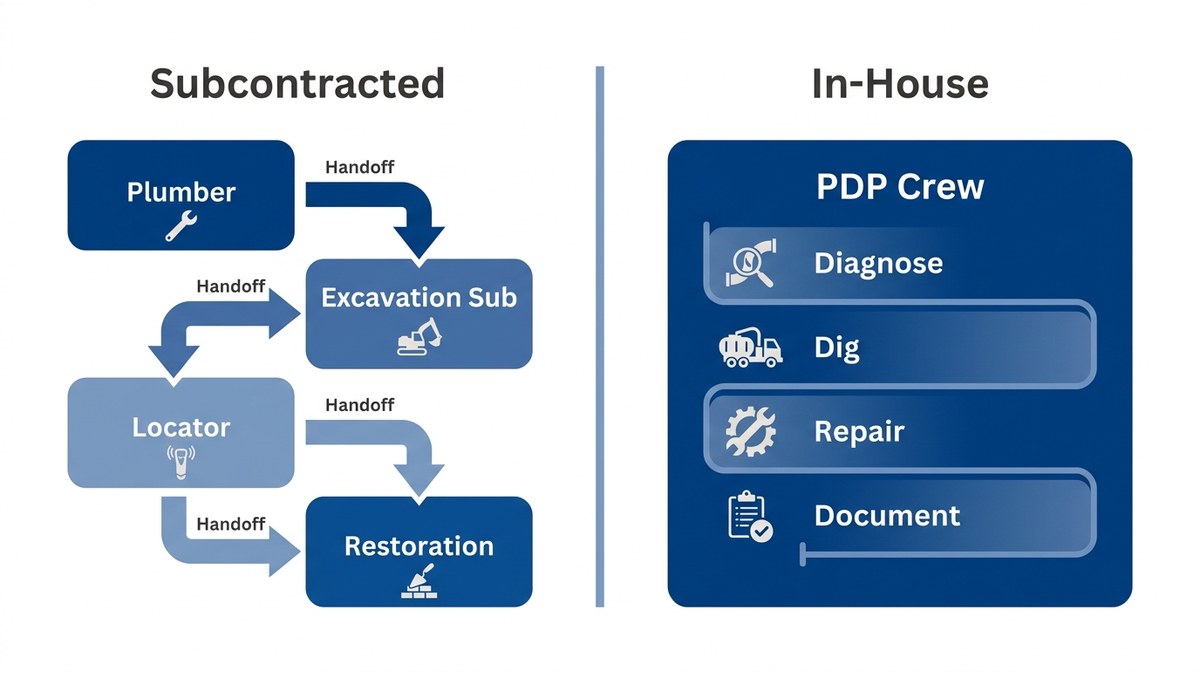
In our work with Columbus facility managers, the pattern is consistent. Schedules rarely slip during the dig itself. They slip in the gaps between the locate, the dig, the repair, and the restoration. That is why PDP keeps in-house sewer repair, excavation, and trenchless technology under one licensed crew. We do not subcontract sewer and excavation work. After 11 years working in Columbus, we treat that as the core of how we operate, not a feature.
Accountability also covers paperwork. Facility managers answer to owners, insurers, and inspectors. A single company's records for diagnosis, dig, repair, and close-out are easier to hand over than a stack assembled from several vendors. We explain the accountability gaps in more detail in why subcontracted excavation creates accountability gaps.
Speed comes from the same structure. When the crew that diagnoses the problem is the crew that digs it, nobody re-explains the job to a new team. Our post on how our in-house crew shortens turnaround covers that in practice.
Some buyers say subcontractors are cheaper or just as good. We are arguing accountability, not price. A lower dig quote that adds a day of closed doors is not cheaper for your facility.
Takeaway: In-house excavation removes handoffs, and fewer handoffs mean one schedule and one team answerable for it.
PDP owns and operates its hydro excavation truck, pressure washers, camera inspection equipment, and trenchless sewer replacement capability. Our own licensed and insured crew runs all of it, and the work is documented in ServiceTitan. We do not list fleet counts or models here, and we would rather show you the scope than a spec sheet.
The value is in how the pieces connect. A typical commercial sewer problem follows a chain:
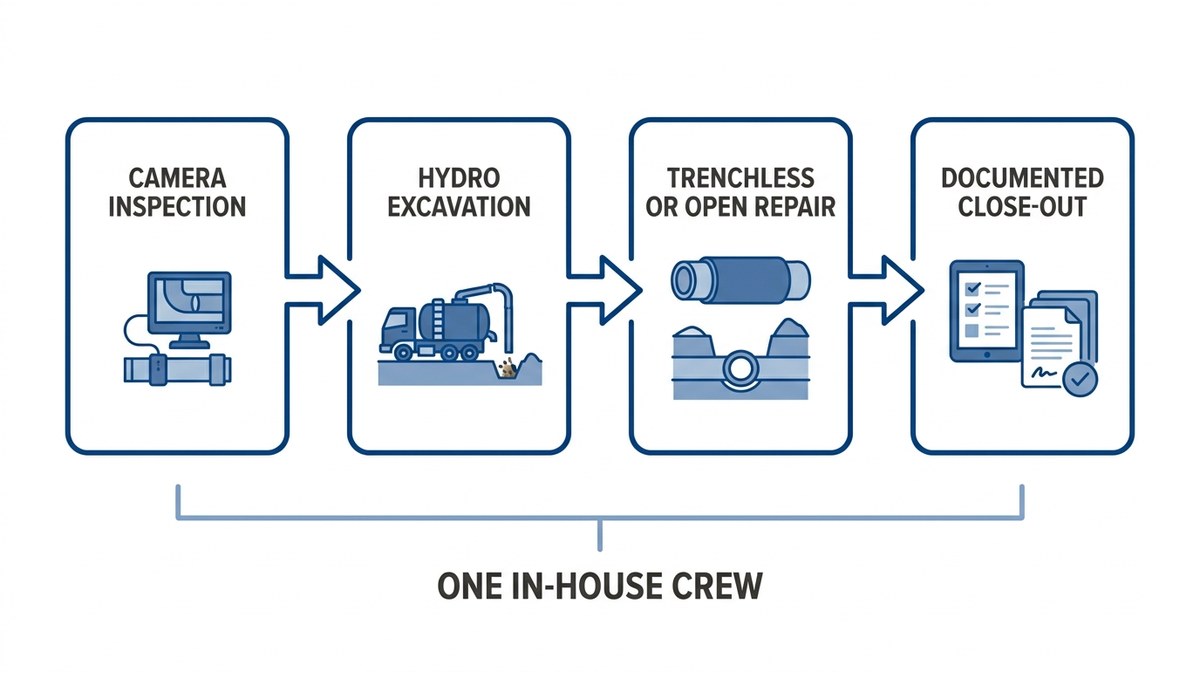
Inspection standards matter at step one. Many municipalities and contractors code pipe defects using NASSCO's Pipeline Assessment Certification Program, a common way to describe defects consistently. A shared vocabulary makes inspection findings easier to compare across vendors and over time.
Sizing the dig to the fault is the point of inspecting first. When we can see the problem before we open the ground, the excavation matches the repair. Our commercial sewer line repair work follows that order.
One clarification, because the terms get mixed up. Hydro jetting also uses pressurized water, but it cleans the inside of a pipe. Hydro excavation opens the ground around the outside of a pipe. A grease-clogged line in a restaurant kitchen may need jetting and never need a dig. A collapsed section needs excavation. Treating them as the same service is how scopes and quotes go wrong.
Equipment is only half of the picture. The crew that runs it matters just as much, and you can see the licensed team behind the work before you ever call us.
Takeaway: Owning the inspection camera, the truck, and the crew lets one team move from diagnosis to documented close-out without a handoff.
Hydro excavation fits best when you must dig near live utilities, under or beside paved areas, or in tight access areas where a backhoe would cause collateral damage. Camera inspection first often confirms how much digging a repair actually needs.
Here are the situations where we see it earn its place on commercial sites:
That last point has a legal and safety backbone. OSHA's rule on specific excavation requirements says the estimated location of underground installations must be determined before an excavation opens. It also says the exact location must be found by safe and acceptable means when the dig approaches them. Hydro excavation is one way to meet that second requirement.
Ohio adds its own layer. Excavators must notify the state's one-call center, Ohio811, before digging. Whoever digs on your property, ask who places that call and who keeps the ticket on file.
Now the honest part: it is not always the answer. In open, unpaved areas with no utilities nearby, conventional digging can be reasonable. And many line problems never need a dig at all. A blockage or grease buildup may clear with drain cleaning and hydro jetting for facilities and multi-unit properties in Columbus, which is why we inspect before we recommend excavation. Excavation is one part of what we do alongside drain work and sewer repair, and we would rather size the scope correctly than sell you the larger one.
We do not quote prices in articles. Costs depend on depth, access, and surface restoration, which is another reason to scope the job first.
Takeaway: Choose hydro excavation when utilities, pavement, or tight access make a wide dig risky, and let inspection decide how much digging the repair needs.
Ask who owns the equipment, who is on the crew, who locates utilities, how the work is documented, and who answers if the schedule slips. If the answer to any of these is "our subcontractor," your timeline depends on someone else.
Use this checklist with any commercial plumber in Columbus, and with us:
Apply the same list to us. If you want to see how we scope a job, read Request a Quote: Commercial Plumbing and Excavation Services. Good vendors welcome these questions, because the answers are the proof.
Takeaway: A vendor that can answer all seven questions without naming a subcontractor owns your schedule, and one that cannot does not.
Excavation is where commercial plumbing jobs are won or lost. The equipment matters, because hydro excavation exposes lines without the collateral damage of heavy digging. Ownership matters more. When the truck, the crew, and the paperwork belong to one company, your schedule has one owner.
We built PDP around that idea. Camera inspection finds the fault. Hydro excavation exposes it. An in-house licensed crew repairs it, and ServiceTitan records document it. We are one reliable partner for facilities that cannot afford to coordinate several vendors.
If you have a sewer or water line problem, or a planned project that involves digging, send us the details. We will scope it with you and tell you plainly what the job needs.
Book a service request or consultation. We respond quickly and operate to professional service standards.
We’re Happy to Confirm
If your property is located in or around the Greater Columbus area and you don’t see your city listed, our team can quickly confirm coverage and service options.