2026-09-16
10
min read
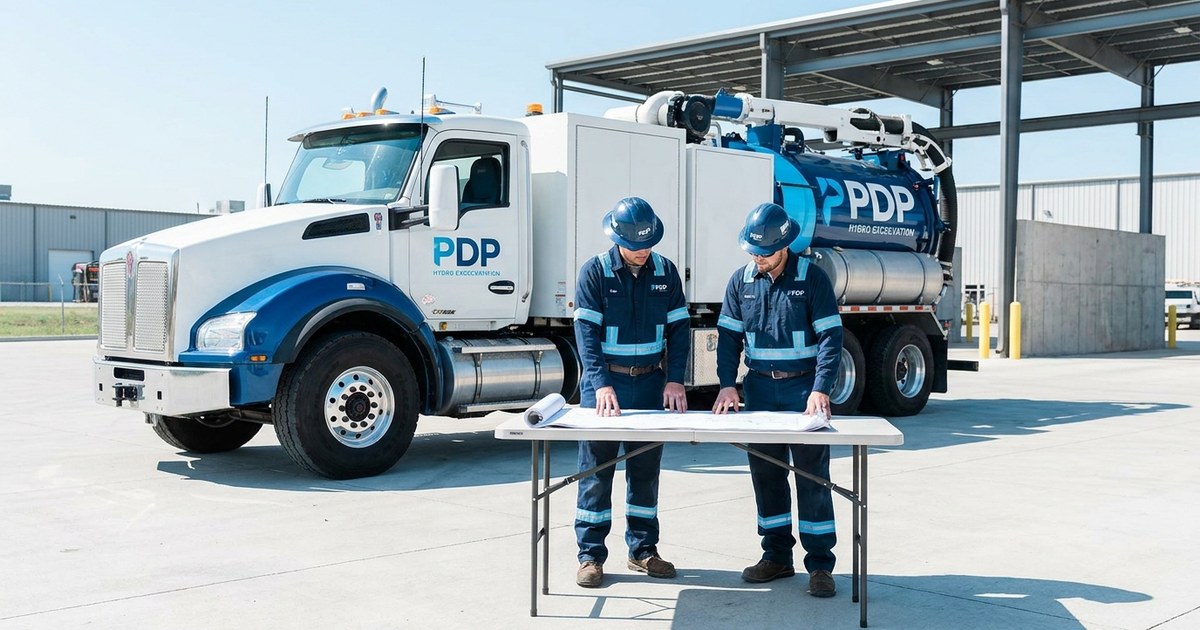
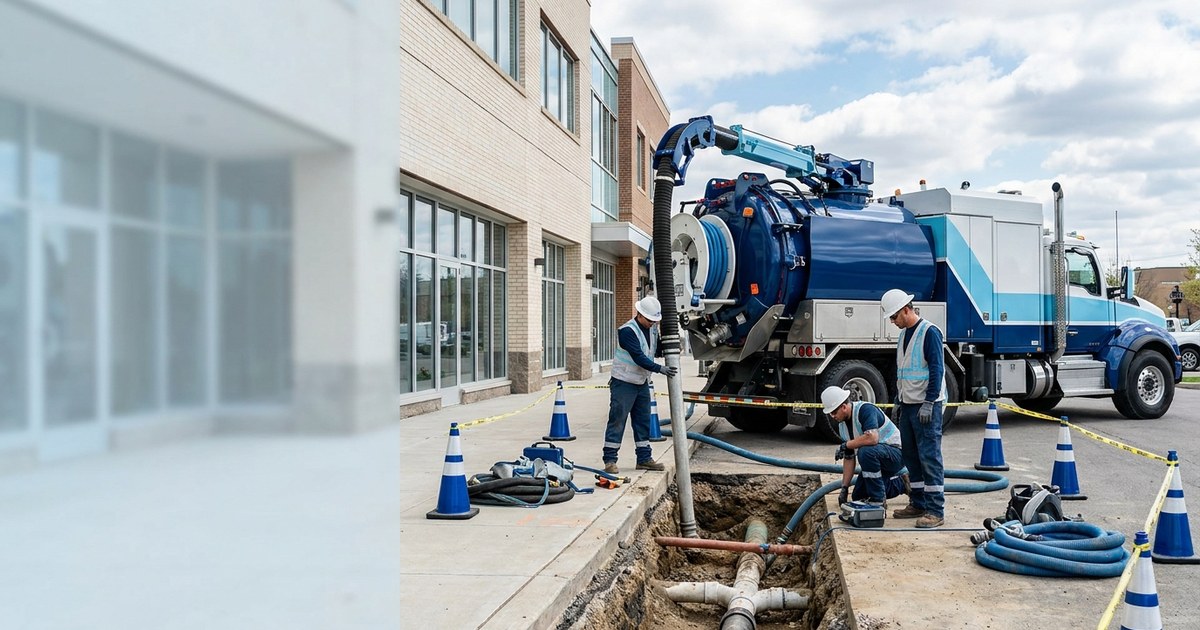
PDP's in-house excavation crew (hydro excavation truck, camera inspection equipment, trenchless repair tools, and licensed operators) eliminates subcontractor handoffs that delay commercial plumbing projects by days or weeks. When the same team that diagnoses the line break also owns the equipment and performs the excavation, response windows collapse from "we'll coordinate and call you back" to "we'll be onsite this afternoon." For facilities across Greater Columbus, that structural difference translates to faster turnaround, single-point accountability, and documented compliance without the coordination tax.
Most facility managers have been burned by the subcontractor shuffle: your plumber diagnoses a sewer line break, then calls their excavation partner. You wait for a quote, wait for scheduling, watch the excavation crew dig days later, then coordinate backfill and inspection across multiple vendors. Each handoff adds delay and finger-pointing. The 2-day project becomes a 10-day ordeal.
PDP built a different model: we own the excavation truck, the camera inspection rig, the trenchless repair equipment, and the crew. One call. One team. One timeline.
The standard plumbing industry model treats excavation as a subcontracted specialty. Your plumber installs and repairs pipe, but digging a 10-foot trench requires heavy equipment, specialized operators, and separate insurance. So they call an excavation vendor when the job demands it. That call introduces structural delay.
First, the excavation vendor quotes the scope (1-3 days if you're lucky, a week if they're booked). Second, scheduling: excavation crews work across multiple industries, so you're competing with other jobs for truck availability. Third, coordination: your plumber can't move forward until the trench is open, can't backfill until the pipe is inspected, and can't close the site until backfill is compacted. Every step depends on synchronizing independent companies with different priorities and schedules.
When something goes wrong (bedrock at unexpected depth, a second break discovered during excavation, backfill supplier delayed), the finger-pointing starts. Your plumber blames the excavation vendor. The excavation vendor blames the scope estimate. You manage the dispute while your facility stays offline.
For facility managers juggling tenant complaints, health department inspection deadlines, or production schedules, that coordination tax is unacceptable. You need a partner who controls the whole process, not one who coordinates it.
"In-house excavation" is marketing spin at most plumbing companies. At PDP, it's operational reality. We own the equipment, employ the operators, and train the crew in-house.
PDP operates a hydro excavation truck capable of precision digging around existing utility lines without the risk of mechanical excavators damaging gas or water mains. We own a push-camera inspection system that navigates 200+ feet of sewer line to locate blockages, root intrusion, and pipe collapse. Our trenchless repair toolkit includes pipe bursting equipment and CIPP lining systems for no-dig rehabilitation. All of this sits in our fleet, maintained on our schedule, available when your facility needs it.
When your sewer line breaks at 2 a.m., we don't call a rental company or wait for a subcontractor. Our crew drives the equipment we've been using all week. That eliminates the 24-48 hour coordination window most plumbing companies need to assemble an excavation response.
PDP's excavation crew reports to the same operations manager who oversees our licensed plumbers and drain technicians. The hydro excavation operators are on our payroll, covered by our insurance, trained in our safety protocols, and held to the same service standards as every other PDP team member. When we dispatch a crew to your facility, the camera inspection technician, the excavation operator, and the licensed plumber coordinating the repair all work for the same company and communicate on the same internal channel.
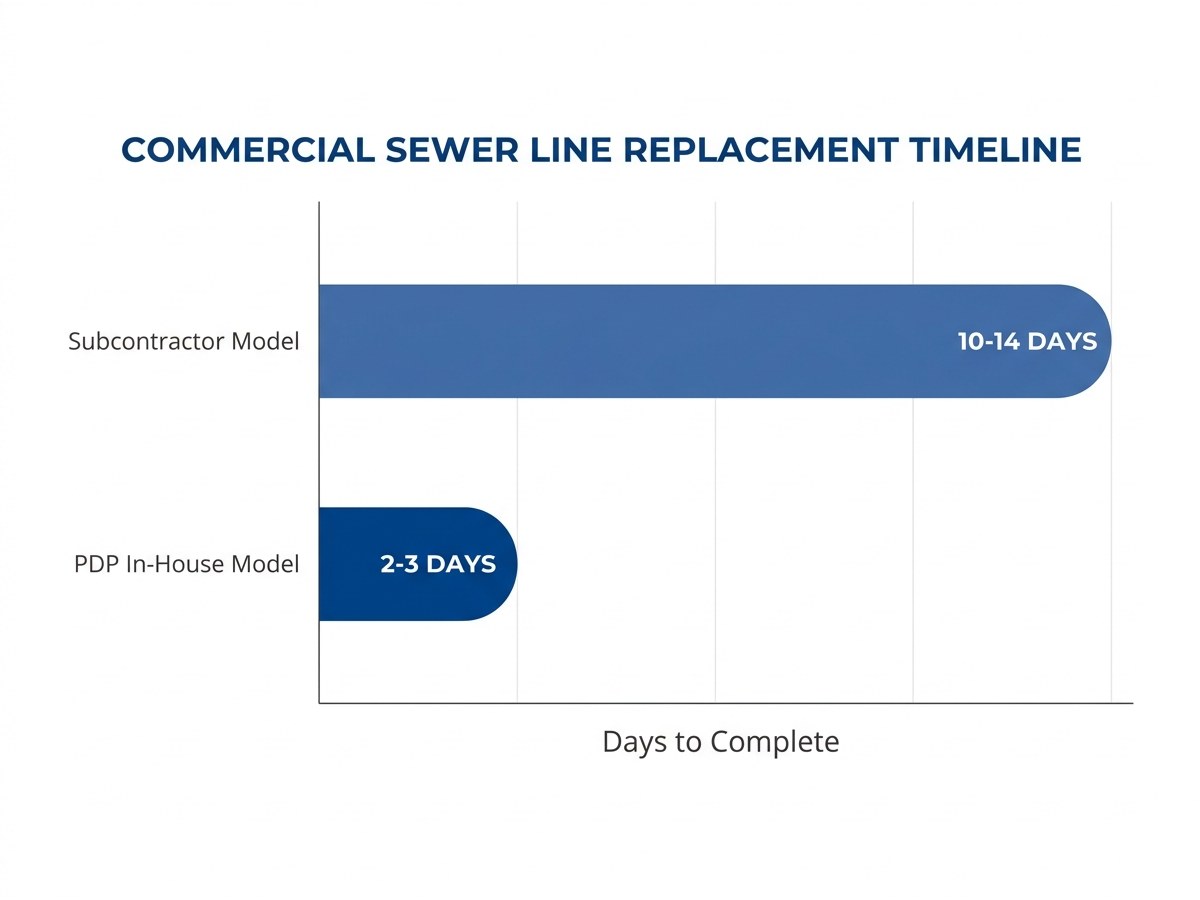
That internal coordination turns a 10-day project into a 3-day turnaround. The excavation operator doesn't wait for your plumber to call with a scope change. They're standing next to each other on the job site, adjusting the plan in real time. The camera inspection runs immediately after the repair, with no scheduling gap. Backfill happens the same day because our crew planned for it from the start.
Let's walk through a typical commercial sewer line replacement twice: once with the standard subcontractor model, then with PDP's in-house approach. The facility is the same. The scope is the same. The difference is who owns the work.
Day 1: Your facility calls a plumber. They run a camera inspection and diagnose a collapsed sewer line 8 feet underground. The plumber calls their excavation partner and promises a quote by end-of-day.
Day 2-3: You approve the excavation quote. The excavation company schedules a crew for "sometime next week" because their trucks are committed to other projects.
Day 8: The excavation crew digs the trench and leaves at 4 p.m. with the line exposed, waiting for the plumber to install the new pipe.
Day 9: Your plumber returns, installs the pipe, and schedules the city inspector.
Day 11: The inspector approves the work. Your plumber calls the excavation company to schedule backfill.
Day 13: The excavation crew returns and backfills the trench. You're finally operational after nearly two weeks of downtime.
Every handoff introduced delay. Every coordination call extended the timeline. Every vendor worked their own schedule with no accountability for your facility's operational continuity.
Day 1: Your facility calls PDP. Our crew arrives the same afternoon, runs a camera inspection, diagnoses the collapsed line, and provides a fixed-price quote on-site. You approve the work. Our excavation operator is already onsite, so the crew schedules the dig for the next morning and coordinates the city inspection in advance.
Day 2: Our hydro excavation truck opens the trench at 8 a.m. By noon, the licensed plumber has installed the new pipe. The camera inspection runs immediately to verify the repair. The city inspector arrives at 2 p.m. (pre-scheduled), signs off, and our crew backfills and compacts the trench by 5 p.m. Your facility is operational.
Total turnaround: 2 days. No subcontractor calls. No scheduling gaps. No finger-pointing. One crew, one accountability chain, one documented project file.
The operational difference isn't luck. It's structure. When PDP owns the excavation equipment and employs the operators, we eliminate the coordination overhead that stretches projects into multi-week ordeals. Commercial plumbing work must meet federal and local building codes, and every hour your facility is offline costs tenant satisfaction, revenue, or production capacity.
Faster turnaround isn't a convenience. It's a cost-containment strategy. When your facility's sewer line fails, every additional day offline multiplies operational pain: tenant complaints escalate, health department deadlines tighten, alternative arrangements cost money, and your reputation as a reliable facility manager takes a hit.
PDP clients report three operational benefits from in-house excavation turnaround:
Predictable project windows. When we quote a 3-day turnaround, we control every variable that affects that timeline. You're not waiting for a subcontractor who might reschedule. You schedule around our committed completion date, and we hit it.
Single-point accountability. When something unexpected happens (bedrock at 6 feet instead of 8, a second line break discovered during excavation), you call one company. Our crew adjusts the scope, updates the quote, and keeps working. No coordination calls. No vendor disputes.
Easier compliance documentation. Manufacturers and importers may be liable for plumbing products that fail to meet federal standards, and facilities must maintain documented compliance for sanitary sewer overflow prevention. PDP tracks every excavation job in ServiceTitan, our field management platform. The diagnostic report, scope photos, repair documentation, inspection sign-off, and warranty information live in one digital file. When auditors ask for records, you forward a PDF.
From our work with facility managers over 11 years in Columbus, we've observed a consistent pattern: clients who previously used subcontractor-dependent plumbers report 10-14 day average turnaround for excavation-involved sewer repairs. PDP's in-house model completes the same scope in 2-4 days, depending on inspection scheduling and site access.
In-house excavation speed becomes mission-critical in five recurring scenarios:
Emergency main breaks. When a sewer main collapses under a parking lot or building slab, your facility is uninhabitable until it's fixed. Waiting a week for subcontractor coordination isn't an option. You need a crew onsite within hours.
Health department inspection deadlines. If your restaurant, healthcare facility, or food processing plant has a scheduled health inspection and discovers a drain backup the day before, you can't reschedule. You need the line cleared, repaired, and documented before the inspector arrives. PDP's 24/7 emergency response eliminates the "we'll call our excavation partner in the morning" delay.
Tenant move-in schedules. Property managers leasing commercial space commit to move-in dates in signed leases. Discovering a sewer line issue during pre-move-in inspection means you're racing the lease start date. Every day of delay risks tenant compensation claims or lease cancellations. In-house turnaround protects your schedule.
Seasonal freezing windows. In Columbus, November through March excavation work competes with frozen ground, snow cover, and limited daylight. When a line breaks in January, subcontractors prioritize easier jobs. PDP's owned equipment and dedicated crew means we mobilize the hydro excavation truck (which handles frozen soil better than mechanical excavators) and complete the work within the same compressed winter window.
Preventive maintenance coordination. Facilities enrolled in our PlumbGuard™ program schedule excavation-involved maintenance during planned downtime windows (holiday closures, renovation phases, lease turnover). Those windows are finite. If your plumber coordinates excavation through a subcontractor who can't meet your 3-day maintenance window, you're forced to defer the work or accept unplanned downtime later. PDP's in-house crew schedules around your operational calendar.
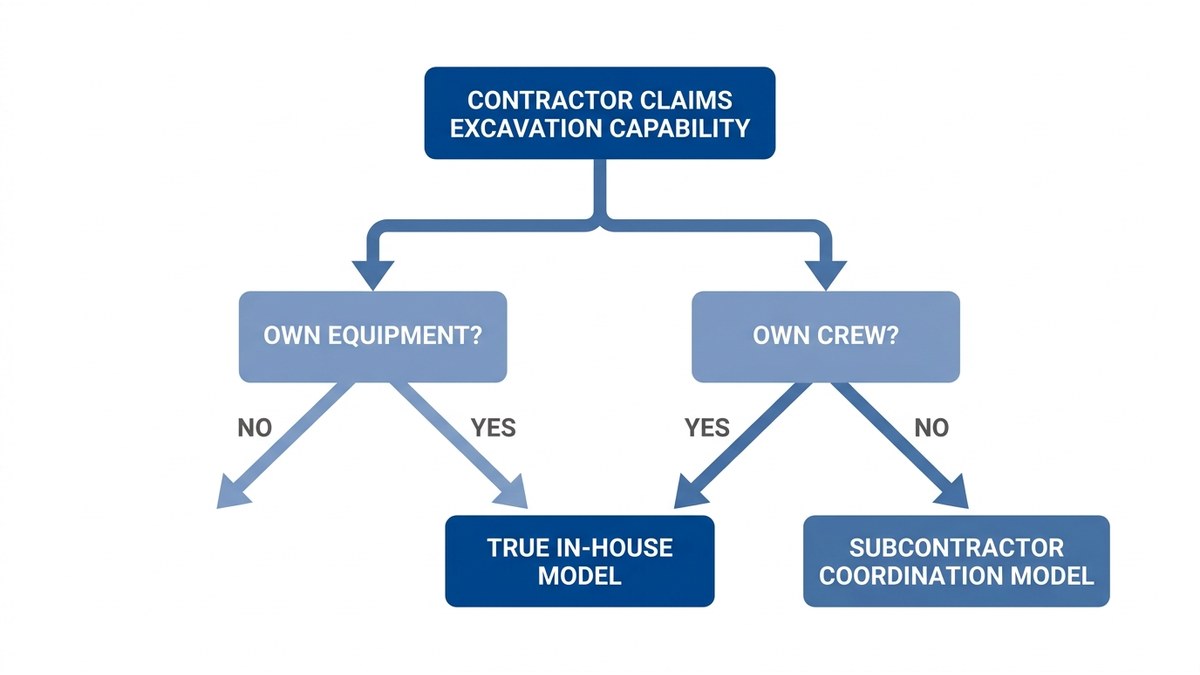
Most plumbing companies claim they "handle excavation." Few actually own the capability. Here's how to separate operational reality from marketing spin:
1. Do you own your excavation equipment, or do you rent/subcontract it? If they own it, ask what's in the fleet (hydro excavation truck, camera inspection rig, trenchless tools). If they subcontract, ask how they coordinate scheduling and whether you'll pay a markup.
2. Who's on your excavation crew payroll? In-house means employees, not subcontractors. Ask how many licensed excavation operators they employ, how they're trained, and whether they're covered by the company's insurance.
3. Can you show me a recent project timeline for a trenchless sewer repair? A real in-house crew can walk you through a completed project: diagnostic date, excavation date, repair date, inspection date, completion date. If they fumble this question or offer only rough estimates, they're coordinating work, not performing it.
4. How do you handle after-hours emergency excavation? If they say "we'll call our excavation partner in the morning," you're looking at a 12-24 hour delay minimum. PDP's in-house crew and owned equipment mean we mobilize the same excavation truck at 2 a.m. that we'd dispatch at 2 p.m., with no after-hours penalty.
5. Where's the excavation work documented, and can I access those records? Facilities must optimize sanitary sewer systems to minimize overflows, which demands excavation permits, inspection sign-offs, backfill compaction tests, and warranty documentation. If the plumber and excavation company maintain separate files, you're the one assembling the paper trail. PDP documents everything in ServiceTitan, and you get a single project file.
These five questions expose the operational structure behind a plumbing company's excavation claims. If they stumble, you're evaluating a coordination service, not an in-house capability.
Eleven years ago, John Mathews founded PDP with a single operational thesis: commercial facility managers need a plumbing partner who owns accountability, not one who coordinates subcontractors. Early in PDP's history, we saw clients frustrated by the excavation coordination gap. A sewer line would fail. We'd diagnose it. Then we'd call our excavation partner, wait for their schedule, and watch the project stretch across 10 days while the client juggled tenant complaints and inspection deadlines.
So we invested in owned capability. We purchased a hydro excavation truck and hired licensed operators. We trained them in our safety protocols, integrated them into our dispatch system, and made them accountable to the same service standards as every PDP plumber. The operational impact was immediate: projects that previously took two weeks now completed in three days.
That shift from coordination to ownership became the foundation of PDP's operational model. We don't just perform plumbing work. We own the entire service lifecycle: diagnostic, excavation, repair, inspection, documentation, preventive maintenance. When a facility manager calls PDP, they're calling one accountable partner.
Most plumbing companies promise fast service and deliver coordination delays. PDP built a different operational structure: owned excavation equipment, employed operators, integrated crew dispatch, documented project management, and 24/7 emergency response with no after-hours penalty. When your facility's sewer line fails, you're not waiting for us to call a subcontractor. You're calling the company that owns the excavation truck, employs the operator, and controls the entire turnaround timeline.
For Columbus-area facility managers tired of juggling multiple contractors and absorbing coordination delays, that structural advantage translates to reduced downtime, predictable project windows, and single-point accountability. The 10-day repair becomes a 3-day turnaround. The multi-vendor documentation nightmare becomes a single ServiceTitan project file. The finger-pointing vanishes because one company owns the outcome.
If you're evaluating commercial plumbing partners and need to see the in-house model in action, request a project timeline walk-through. We'll show you how PDP's owned excavation capability eliminates the coordination tax and delivers the turnaround your facility operations demand.
Book a service request or consultation. We respond quickly and operate to professional service standards.
We’re Happy to Confirm
If your property is located in or around the Greater Columbus area and you don’t see your city listed, our team can quickly confirm coverage and service options.